






































































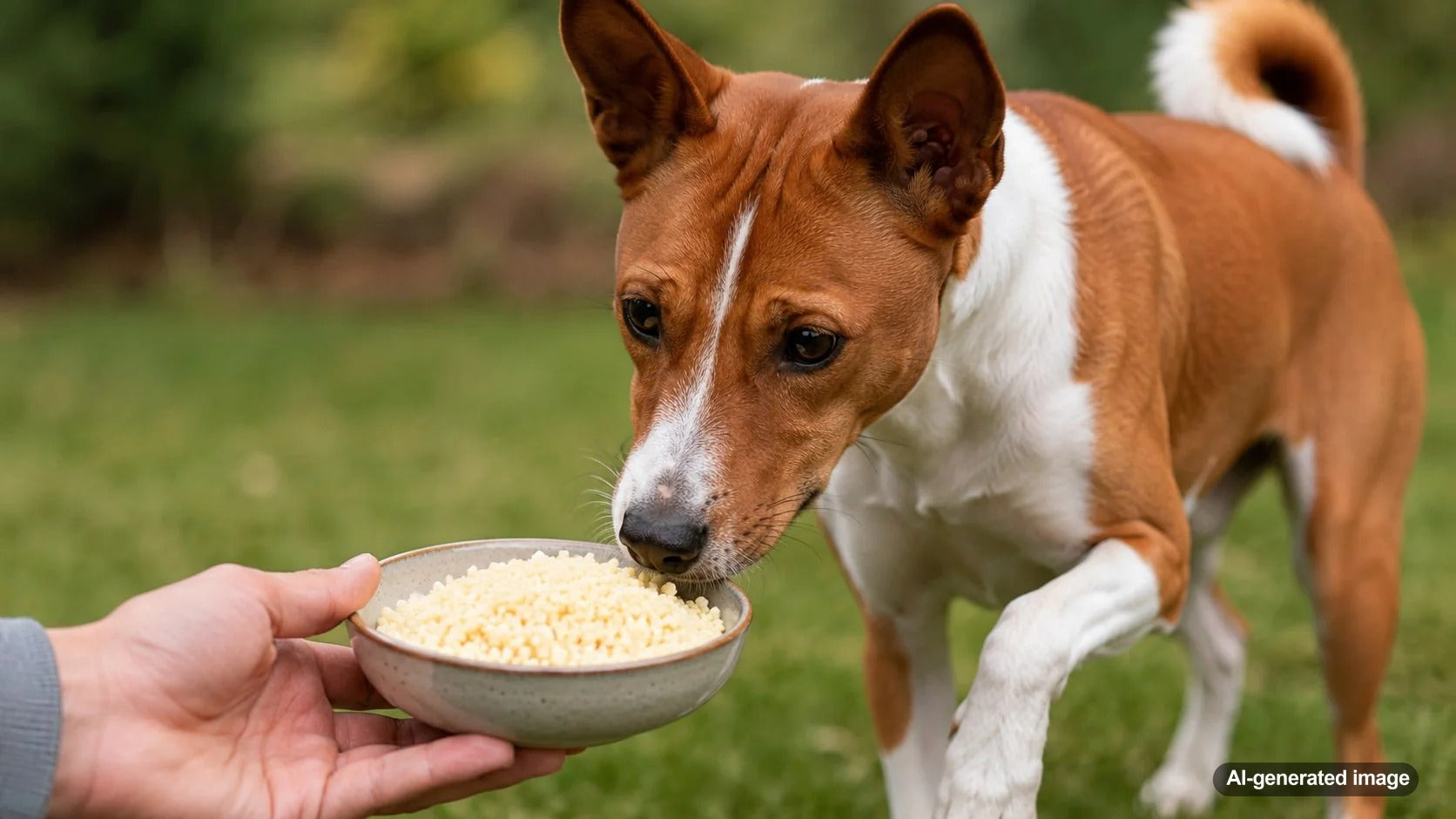
Can Dogs Eat Plain Couscous? Yes, many dogs can eat a small amount of plain, cooked couscous as an occasional extra, as long as it is served without salt, butter, oil, garlic, onion, sauces, or seasoning. The key words are plain, cooked, and small. Couscous should not replace your dog's complete and balanced food, but a tiny spoonful now and then is usually not a problem for healthy dogs who tolerate wheat well.
Still, couscous is one of those foods that feels more confusing than it looks. It sits next to grains on the dinner table, behaves a little like pasta, and often shows up in recipes packed with herbs, oil, lemon, onions, raisins, or salty toppings. For dogs, the plain version and the seasoned human-food version are very different.
Quick Answer: Can Dogs Eat Plain Couscous?
Yes, plain cooked couscous can be safe for many dogs in small amounts. Serve it soft, unseasoned, and cooled. Skip it if your dog has a known wheat allergy, gluten sensitivity, a sensitive stomach, diabetes, pancreatitis history, or a veterinarian-recommended special diet unless your vet says it is okay.
What Is Couscous, Really?
Couscous is made from semolina wheat, so it is not the same as rice or quinoa. It is closer to a tiny pasta. That matters because dogs with wheat sensitivities should avoid it, and dogs who do best on lower-carbohydrate diets may not need it at all.
For most healthy dogs, a few bites of plain cooked couscous are mainly a carbohydrate add-on. It can provide quick energy, but it does not offer the same enrichment value as a chew, puzzle toy, licking routine, or protein-rich training reward. Think of it as a boring little table-scrap possibility, not a superfood.
When Plain Couscous Is Usually Okay
Plain couscous is usually the safest when it has been cooked in water only, cooled fully, and served in a very small portion. A good first try might be a half teaspoon for a small dog, 1 teaspoon for a medium dog, or 1 tablespoon for a large dog. Watch your dog afterward for gas, loose stool, itching, vomiting, or any change in appetite.
Puppies and senior dogs deserve extra caution. Puppies have growing digestive systems and need most of their calories from puppy food. Seniors may have medical conditions, dental issues, or prescription diets that make random add-ons a poor fit. When in doubt, ask your veterinarian before adding new human foods.
Helpful tip: If your dog is the type who inhales food, mix a tiny amount of couscous into their regular meal rather than offering a sticky clump on its own. Soft clumps can encourage gulping, especially in small dogs and flat-faced breeds.
When Couscous Is Not Dog-Friendly
The biggest couscous risk is not usually the couscous itself. It is what people cook with it. Couscous salad, boxed flavored couscous, restaurant leftovers, and buttery side dishes can contain ingredients that are not safe or not ideal for dogs.
Avoid couscous that contains:
- Garlic, onion, chives, scallions, leeks, or shallots
- Raisins, currants, grapes, or dried fruit mixes
- Heavy salt, bouillon, broth with onion or garlic, or seasoning packets
- Butter, cream, cheese, or rich sauces
- Spicy seasonings, lemon-heavy dressings, or lots of oil
- Cooked bones, fatty meat scraps, or unknown leftovers
If your dog ate seasoned couscous and you are not sure what was in it, check the ingredient list or call your veterinarian. If the couscous included raisins, grapes, onions, garlic, or a large amount of salt, it is better to get professional guidance quickly rather than waiting to see what happens.
How Much Couscous Can a Dog Have?
Couscous should be treated like an occasional extra, not a daily bowl filler. Even plain couscous adds calories without adding much chewing satisfaction, dental support, or mental stimulation. Too many extras can also crowd out the nutrients your dog gets from their regular food.
| Dog Size | First-Time Amount | Best Use |
|---|---|---|
| Small dog | About 1/2 teaspoon | Mixed into regular food |
| Medium dog | About 1 teaspoon | Occasional meal topper |
| Large dog | About 1 tablespoon | Small plain add-in only |
These are conservative starting amounts, not a rule that every dog needs couscous. If your dog gains weight easily, has a sensitive stomach, or is on a vet-managed nutrition plan, skip the experiment unless your vet approves it.
Better Ways To Make Treat Time Feel Special
Many dog parents ask about couscous because they want to share something from their plate. That is understandable. Dogs are world-class hopeful staring champions. But if the real goal is to give your dog a fun moment, a calming activity, or a more satisfying snack, enrichment usually beats a spoonful of plain carbs.
For longer-lasting treat play, The Pupsicle can help turn treat time into a more engaging routine. Instead of handing over random table scraps, you can use dog-appropriate treats or frozen refills to keep your pup busy, licking, and mentally engaged.
If you like making homemade dog-safe treats, the Pupsicle Treat Tray is a useful tool for freezing perfectly shaped treats for Pupsicle play. Keep recipes simple, dog-friendly, and portion-aware. Plain pumpkin, dog-safe wet food, or vet-approved ingredients are usually better choices than trying to turn your dinner side dish into a dog snack.
Common Mistakes Dog Parents Make With Couscous
One common mistake is assuming plain and lightly seasoned mean the same thing. To a person, a little garlic salt, broth, feta, or dressing may seem harmless. To a dog, those extras can be risky or upsetting to the stomach.
Another mistake is using couscous to tempt a dog who is not eating. A missed meal can happen, but appetite changes can also point to dental pain, nausea, stress, illness, or another issue. If your dog is refusing food, acting off, vomiting, having diarrhea, drooling excessively, or seems painful, contact your veterinarian instead of trying lots of new foods.
It is also easy to overdo portions. Couscous is tiny, so a scoop looks smaller than it is. For a small dog, a few tablespoons may be a lot of extra calories and carbohydrates. Start smaller than you think.
Dog Parent FAQs
Can dogs eat couscous every day?
It is better not to make couscous a daily habit unless your veterinarian specifically recommends it as part of a diet plan. Most dogs should get their main nutrition from complete and balanced dog food.
Can dogs eat pearl couscous?
Plain cooked pearl couscous may be okay in very small amounts for some dogs. Because the pieces are larger, cook them until soft and avoid serving clumps to dogs who gulp.
Can dogs eat couscous with chicken?
Plain cooked chicken and plain cooked couscous may be okay for many dogs in small amounts, but avoid skin, bones, salt, garlic, onion, sauces, and seasoning. If your dog needs a bland diet, ask your vet what is best.
Is couscous better than rice for dogs?
Not necessarily. Rice is often used in simple bland diets when recommended by a veterinarian, while couscous contains wheat and gluten. The better choice depends on your dog's health, tolerance, and diet needs.
What should I do if my dog ate seasoned couscous?
Check the ingredients. If it contained garlic, onion, raisins, grapes, heavy salt, or unknown seasonings, call your veterinarian or a pet poison helpline for guidance.
The Bottom Line On Plain Couscous For Dogs
Can Dogs Eat Plain Couscous? For many healthy dogs, yes, a tiny amount of plain cooked couscous can be an occasional extra. It should be unseasoned, cooled, and served in moderation. But it is not essential, and it is not the most enriching treat choice.
If your dog loves food-based fun, focus on safe, repeatable routines that offer more than a quick bite. Licking, chewing, puzzle play, and slow treat time can support calmer moments, mental stimulation, and a happier daily rhythm. Couscous may be okay once in a while, but your dog's best treats are the ones that fit their body, their behavior, and your life together.


