






































































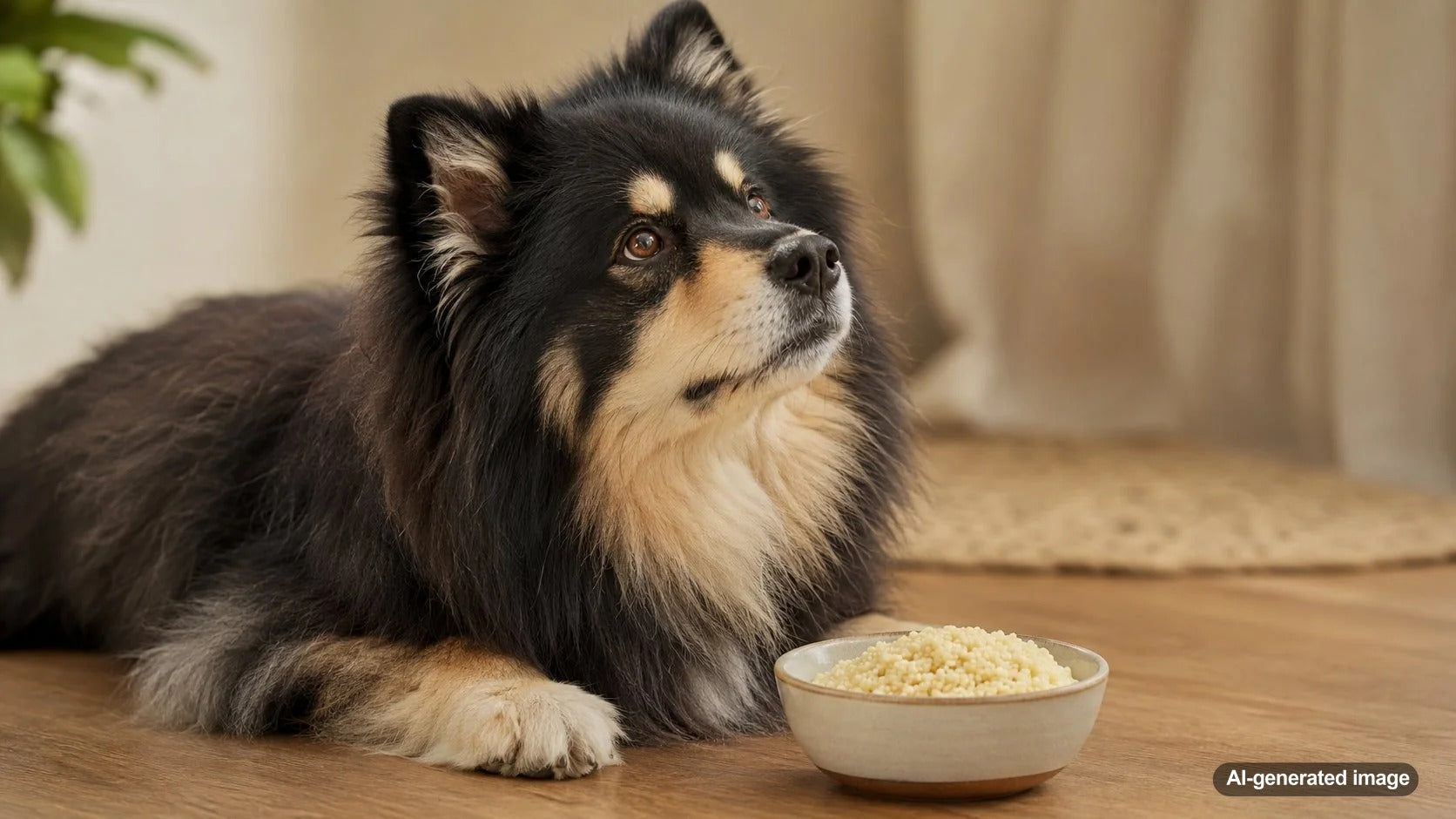
Can dogs eat plain couscous? In most cases, a healthy dog can have a small amount of fully cooked, plain couscous as an occasional bite. Couscous is not toxic to dogs, but it is made from wheat, adds extra carbohydrates and calories, and should never replace a complete and balanced dog food.
The word "plain" matters. Couscous prepared with onion, garlic, butter, heavy oil, salty broth, raisins, or rich sauces can create problems that the unseasoned grain-like pasta would not cause on its own.
Quick Answer
Yes, most dogs can eat a little plain couscous. Cook it thoroughly in water, let it cool, and offer only a small taste. Skip it if your dog has a known wheat sensitivity, requires a carefully controlled diet, or has been advised to avoid extra carbohydrates.
What Is Couscous, Exactly?
Couscous may look like a tiny grain, but traditional couscous is actually made from durum wheat semolina. Nutritionally, it is closer to pasta than to a whole grain such as brown rice. Pearl couscous is also wheat-based, although its larger, round pieces have a chewier pasta-like texture.
Plain couscous provides carbohydrates and small amounts of protein and micronutrients. However, a dog eating a complete commercial diet should already receive the nutrients needed in appropriate proportions. Couscous is therefore best treated as an occasional extra, not as a nutritional upgrade or routine meal ingredient.
How to Serve Couscous Safely
Prepare couscous with water only. It should be fully hydrated, soft, cooled to a comfortable temperature, and free from seasoning. Do not offer dry couscous directly from the package. Dry pieces can be harder to swallow and may cause digestive discomfort if a dog eats a large quantity.
For a first taste, think in teaspoons rather than bowlfuls. A small dog can start with about half a teaspoon, while a larger dog can try one or two teaspoons. Watch for vomiting, diarrhea, gas, itching, or unusual discomfort during the following day. If your dog tolerates it, couscous can remain a rare table-food treat rather than becoming a regular side dish.
All treats and extras combined should generally account for no more than about 10 percent of a dog's daily calories. The remaining calories should come from complete and balanced food. Because calorie needs vary widely by size, age, activity, and health, ask your veterinarian about an appropriate portion if weight management is a concern.
What Should Never Be Added?
Check the entire recipe, not just the couscous. Avoid servings made with onion, garlic, leeks, chives, salty stock, heavy butter, rich sauces, raisins, or spice blends. Onion and garlic are toxic to dogs, while fatty or heavily salted additions can trigger digestive trouble and may be especially risky for dogs with certain medical conditions.
Restaurant couscous and boxed mixes are poor choices because their ingredient lists can include seasonings, sodium, fat, or dried fruit. Even a homemade vegetable couscous may contain onions or garlic hidden in the broth. If you did not prepare it and cannot confirm every ingredient, do not share it.
Which Dogs Should Avoid Couscous?
Dogs with a known wheat allergy or sensitivity should not eat traditional couscous. A food reaction may appear as itching, recurrent ear or skin trouble, vomiting, diarrhea, or persistent digestive upset, but these signs can have many causes. Contact your veterinarian rather than trying to diagnose a food allergy at home.
Extra caution is also sensible for dogs with diabetes, pancreatitis, obesity, chronic digestive problems, or a prescription diet. Plain couscous may still conflict with an individual feeding plan even though it is not inherently toxic. Puppies and toy breeds need particularly small tastes because a seemingly minor human-sized serving can represent a significant share of their daily calories.
What If Your Dog Ate Couscous From Your Plate?
If your dog grabbed a small amount of plain, cooked couscous, monitor them and provide normal access to fresh water. Most healthy dogs are unlikely to experience more than possible mild stomach upset.
If the dish contained onion, garlic, raisins, an unknown seasoning blend, or a large amount of fat, contact your veterinarian promptly. Also seek veterinary guidance if your dog ate a large quantity, swallowed dry couscous, or develops repeated vomiting, diarrhea, weakness, abdominal swelling, excessive drooling, breathing difficulty, or unusual behavior. When calling, share your dog's approximate weight, the amount eaten, the ingredients, and the time of ingestion.
Is Couscous a Good Training Treat?
Loose couscous is safe enough in the right circumstances, but it is not especially convenient for training. The tiny pieces are messy, difficult to deliver quickly, and not very motivating for many dogs. A small, purpose-made reward such as Love Nuggets is easier to portion and hand out during short training sessions.
If you do offer couscous, placing a cooled teaspoon on top of regular food is more practical than feeding individual pieces. Introduce only one unfamiliar food at a time so you can tell what caused any digestive reaction.
Dog Parent FAQs
Can dogs eat pearl couscous?
Yes, most healthy dogs can have a small amount of fully cooked, plain pearl couscous. Because the pieces are larger, make sure they are soft and offer an appropriately small portion.
Can dogs eat whole-wheat couscous?
A small plain serving may be safe for dogs that tolerate wheat. Its added fiber does not make it necessary, and too much may cause gas or loose stool.
Can dogs eat couscous with chicken?
They may have plain couscous with a little boneless, skinless, fully cooked chicken, provided neither food contains seasoning, sauce, butter, onion, or garlic.
Is couscous better than rice for dogs?
Neither is automatically better for every dog. Both add carbohydrates, while couscous contains wheat. Your veterinarian can recommend the most appropriate option for a dog with digestive or dietary needs.
The Bottom Line
Plain couscous is generally safe as a small, occasional taste for a healthy dog. Serve it cooked, cooled, and completely unseasoned, and keep portions modest. The recipe surrounding the couscous often presents the greater risk, so inspect every ingredient before letting your pup clean the plate.


