






































































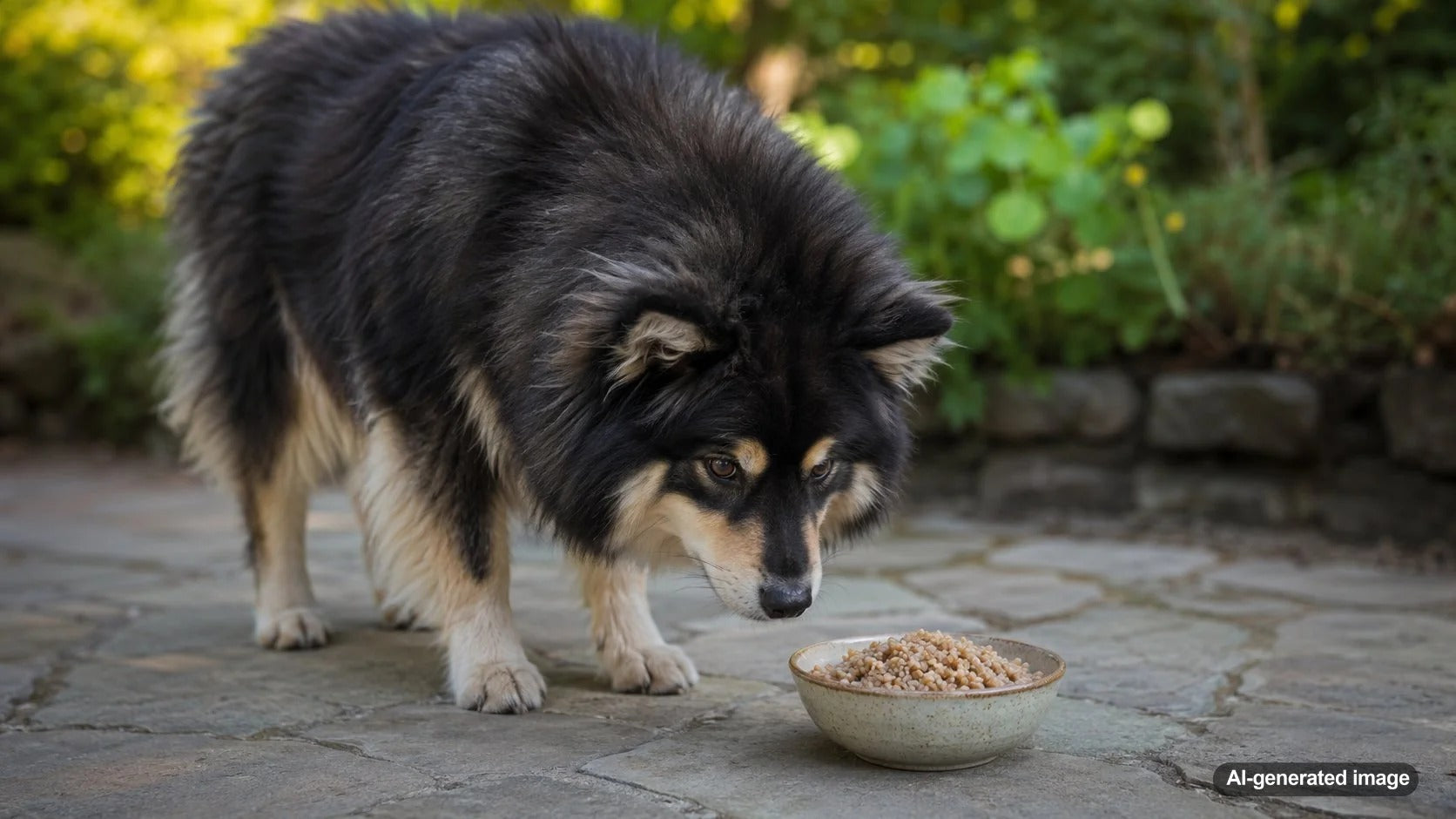
Your dog has noticed the bowl of warm buckwheat on the counter, and now you are getting the unmistakable look that asks, "Are you sharing?" Plain, fully cooked buckwheat can generally be offered to many healthy dogs in a small amount. The details matter, though, because a spoonful of cooked groats is very different from a seasoned buckwheat dish, a sweetened pancake, or the buckwheat plant growing outdoors.
Buckwheat is not actually wheat. It is a seed used much like a whole grain, and it is naturally gluten-free. That does not make it necessary for dogs, but it can be an occasional food for a dog who tolerates it well.
What Kind of Buckwheat Is Appropriate for Dogs?
The simplest option is common buckwheat sold as hulled groats. Cook it in plain water until soft, then let it cool completely before offering any to your dog. The finished texture should be tender rather than dry, hard, or crunchy.
Do not let your dog eat the leaves, flowers, stems, or other parts of a living buckwheat plant. The plant contains compounds that can cause photosensitivity and skin injury in animals. Store-bought, hulled food seeds are not the same thing as allowing a dog to graze on the plant, but using a familiar culinary product is still important.
Buckwheat flour may appear in baked foods, but the full ingredient list determines whether those foods are safe. Pancakes, muffins, and soba noodles can contain ingredients dogs should avoid or do not need, including xylitol, chocolate, raisins, excessive salt, butter, onion, or garlic. Some soba noodles also contain wheat, so they are not necessarily made from buckwheat alone.
Does Buckwheat Offer Benefits for Dogs?
Cooked buckwheat supplies carbohydrates and fiber, along with modest amounts of plant protein and minerals. Its fiber may help make a small food portion satisfying, but too much fiber introduced suddenly can also lead to gas, loose stool, or abdominal discomfort.
A complete and balanced dog food should remain the foundation of your dog's nutrition. Buckwheat should not replace the protein, fat, vitamins, and minerals supplied by that regular diet. Its most useful role is as an occasional topper, tiny snack, or enrichment ingredient rather than a daily nutritional upgrade.
Being gluten-free also does not automatically make buckwheat better for every dog. True food reactions should be assessed with a veterinarian, especially when a dog has persistent itching, recurring ear trouble, vomiting, or diarrhea. Adding several new ingredients can make it harder to identify what is causing a problem.
How Much Plain Buckwheat Can a Dog Eat?
Begin with less than a full serving. A small dog might try about half a teaspoon, while a medium or large dog might start with one or two teaspoons. Watch your dog for the next day before offering it again. If stool quality and appetite remain normal, an occasional modest spoonful may be reasonable.
Portion size should reflect the dog's body size, health, regular diet, and total daily treats. As a general habit, all extras combined should account for no more than about 10 percent of daily calories. Tiny dogs reach that allowance much faster than large dogs, and dogs managing obesity, diabetes, digestive disease, kidney disease, or a prescription diet need individualized veterinary guidance.
- Hulled and intended for human food
- Cooked thoroughly in water
- Completely plain and cooled
- Soft enough to eat comfortably
- Offered in a small, measured portion
Easy Ways to Serve It
You can place a small spoonful on top of your dog's usual meal or offer a few soft grains from a clean spoon. For a more engaging routine, mix a little cooled buckwheat with your dog's familiar wet food and spread a thin layer over the FlipMat. Its textured surfaces can turn a quick taste into slower licking and mental activity.
You can also portion a dog-safe mixture into the Pupsicle Treat Tray and freeze it. Keep buckwheat a minor ingredient, use only foods your dog already tolerates, and count the entire recipe toward the day's treat allowance. Supervise enrichment time and clean the toy or feeder after use.
Common Buckwheat Mistakes to Avoid
Avoid feeding dry, uncooked groats as a crunchy snack. They can be difficult to digest and may present a choking concern, particularly for puppies, small dogs, seniors, and dogs that gulp food. Buckwheat should also be discarded if it smells musty, appears moldy, or has been stored improperly.
Do not introduce buckwheat alongside several other unfamiliar foods. Testing one new ingredient at a time makes it easier to notice intolerance. Puppies and dogs with sensitive stomachs should receive especially small trial portions.
When Should You Call Your Veterinarian?
Stop serving buckwheat and contact your veterinarian if your dog develops repeated vomiting, diarrhea, loss of appetite, unusual tiredness, facial swelling, hives, excessive itching, or difficulty breathing. Breathing trouble, collapse, or major swelling requires urgent veterinary care.
If your dog ate a buckwheat plant rather than cooked food, call your veterinarian or an animal poison service for guidance. Mention which part was eaten, the estimated amount, when it happened, and whether your dog has been exposed to sunlight. Do not induce vomiting unless a veterinary professional specifically instructs you to do so.
Dog Parent FAQs
Can dogs eat buckwheat every day?
Buckwheat is better treated as an occasional extra unless a veterinarian or veterinary nutritionist has included it in a balanced feeding plan. Daily additions can contribute unnecessary calories or disrupt the balance of the regular diet.
Can dogs eat raw buckwheat?
It is safer to skip raw groats. Serve only thoroughly cooked, soft, hulled buckwheat intended for human consumption.
Can dogs eat buckwheat pancakes?
Most pancakes are not ideal dog treats because they may contain sugar, butter, salt, milk, syrup, chocolate, raisins, or xylitol. A tiny piece is only potentially appropriate if every ingredient is dog-safe, but plain cooked groats are the simpler choice.
Is buckwheat safe for dogs with wheat allergies?
Buckwheat is botanically unrelated to wheat and naturally contains no gluten. However, cross-contact and additional ingredients are possible, so ask your veterinarian before serving it to a dog with a diagnosed food allergy.
The Bottom Line
Plain, fully cooked buckwheat can be an occasional addition for many healthy dogs, but it should be introduced slowly and served in a modest portion. Choose hulled culinary groats, cook them in water, and leave every seasoning behind. When in doubt, especially for a dog with health or dietary restrictions, check with your veterinarian before sharing.


