






































































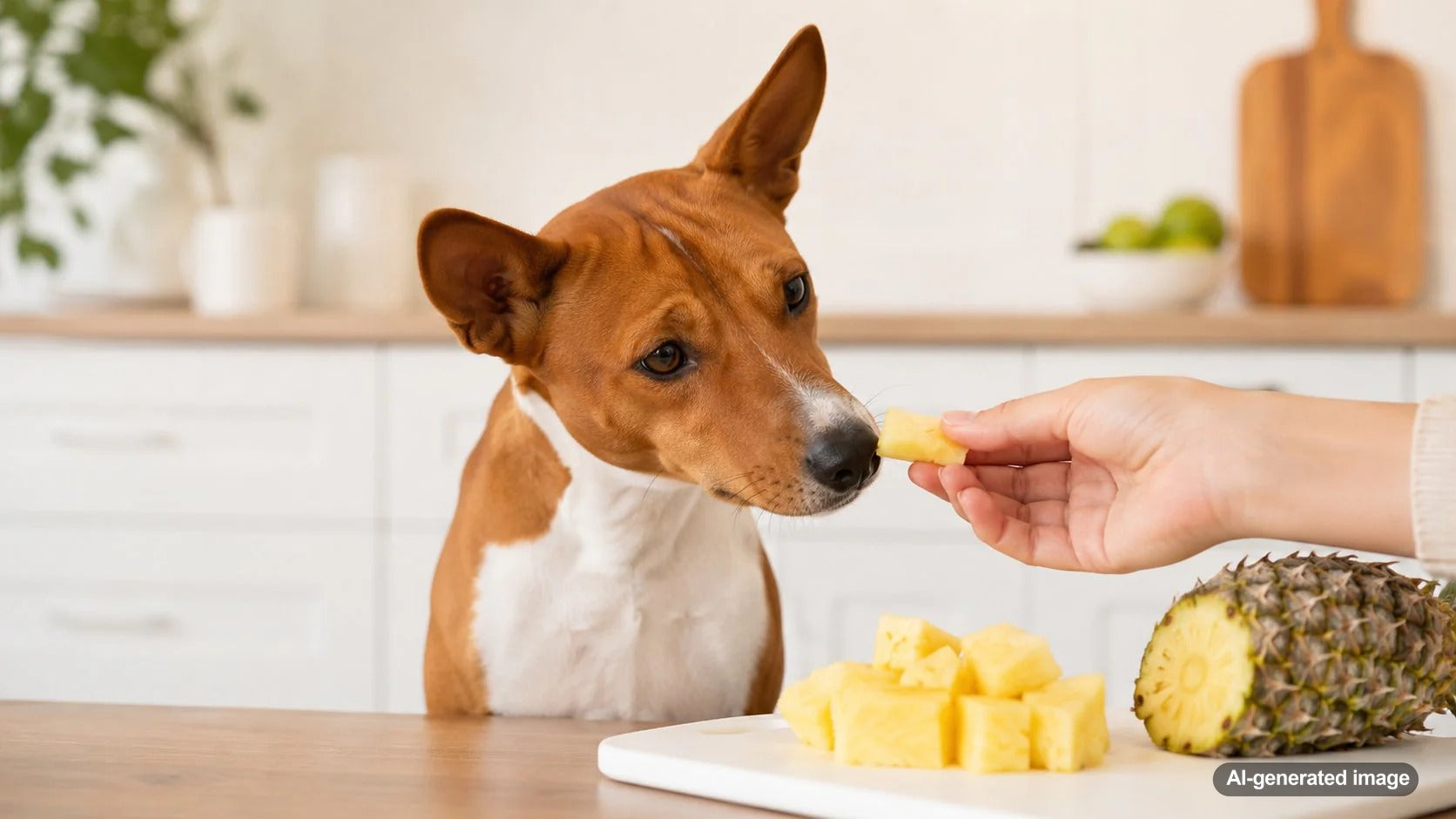
Can dogs eat pineapple? Yes, many dogs can enjoy fresh pineapple as an occasional treat when it is served the right way. The sweet yellow flesh is the safe part, while the tough rind, spiky skin, leaves, and fibrous core should stay out of your dog's bowl because they can be hard to chew and digest. Like any treat, pineapple works best in small pieces, introduced slowly, and served with your dog's size, stomach, and overall diet in mind.
Pineapple can feel like the kind of snack your dog magically hears from three rooms away. One minute you are cutting fruit, the next you have a hopeful nose at your knee. Before you share, it helps to know how much is reasonable, which forms to avoid, and when pineapple may not be the best choice for your pup.
Is Pineapple Good for Dogs?
Fresh pineapple contains water, fiber, vitamin C, vitamin B6, manganese, and natural enzymes. That does not mean your dog needs pineapple to be healthy, but it can be a fun, juicy snack for dogs who tolerate fruit well. Think of it as a treat, not a meal upgrade or daily necessity.
The biggest benefit for many dog parents is variety. A few tiny pineapple pieces can make reward time more exciting, especially for dogs who love bright, sweet flavors. It can also be frozen for a refreshing warm-weather snack or mixed into a homemade enrichment routine for dogs who enjoy licking and problem-solving.
How to Safely Serve Pineapple to Your Dog
Start with fresh pineapple and cut away every tough part. The soft inner fruit should be sliced into small, bite-sized pieces based on your dog's size. A Chihuahua needs a very different piece than a Labrador, and even enthusiastic big dogs can gulp food too quickly when they are excited.
If your dog has never had pineapple before, offer one small piece and watch how they do. Some dogs have sensitive stomachs and may get loose stool, gas, or an upset belly from new fruits. If your dog has diabetes, is overweight, has a history of pancreatitis, or is on a special diet, ask your veterinarian before offering sugary fruits.
Fresh, Frozen, Canned, or Dried: What Is Best?
| Type of pineapple | Dog-friendly? | What to know |
|---|---|---|
| Fresh pineapple | Usually yes, in small amounts | Serve only the soft flesh, cut into small pieces. |
| Frozen pineapple | Usually yes, with care | Use small pieces and supervise so it is not a choking risk. |
| Canned pineapple | Best to avoid | Many canned options are packed in syrup or extra sugar. If it is packed only in water, rinse well and serve rarely. |
| Dried pineapple | Usually not ideal | It is more concentrated in sugar and may include added sweeteners or preservatives. |
| Pineapple rind, leaves, or core | No | These parts are tough, fibrous, and can create choking or digestive risks. |
How Much Pineapple Can Dogs Eat?
Portion size matters more than dog-parent excitement, and yes, we know those begging eyes are powerful. For small dogs, one or two tiny pieces may be plenty. Medium dogs may do well with a few small chunks, while large dogs can usually handle a little more, as long as treats still stay limited.
A helpful rule is that treats, including fruit, should make up only a small part of your dog's daily intake. Too much pineapple can add extra sugar and acidity, which may lead to an upset stomach. If your dog is a puppy, senior, toy breed, or has a sensitive belly, start even smaller than you think you need to.
Can Pineapple Help Stop Dogs From Eating Poop?
You may have heard that pineapple can stop dogs from eating poop. Some dog parents try it because pineapple may change the taste of stool, but it is not a reliable fix. Poop eating, also called coprophagia, can happen for many reasons, including curiosity, habit, boredom, stress, hunger, medical issues, or simply because some dogs are gross little geniuses.
If this behavior is new, intense, or paired with appetite changes, weight changes, diarrhea, vomiting, or anxiety, talk with your veterinarian. For many dogs, the most useful first steps are cleaning up quickly, improving supervision, adding appropriate enrichment, and rewarding your dog for leaving stool alone.
Fun Ways to Use Pineapple for Enrichment
Pineapple does not have to be handed over as plain chunks every time. You can mash a small amount into plain, dog-safe yogurt, freeze tiny bits into a slow treat, or blend a little with water and freeze it in small portions. Keep recipes simple, avoid added sugar, and never use ingredients that are unsafe for dogs, such as xylitol, chocolate, grapes, raisins, or alcohol.
For a longer-lasting snack routine, a small amount of pineapple can be blended into a homemade treat mixture and frozen in the Pupsicle Treat Tray. Once frozen, the treat can be used with The Pupsicle to turn a tiny serving into a more engaging licking and play session. This can be especially helpful for dogs who finish snacks in two seconds and then immediately ask, very politely, for more.
When Pineapple Is Not a Great Choice
Pineapple is not right for every dog. Dogs with sensitive stomachs, sugar restrictions, weight concerns, dental discomfort, or certain medical conditions may need to avoid it or only have it with veterinary guidance. The acidity can also bother some dogs, especially if they eat too much at once.
Watch your dog's response after trying pineapple. If they seem itchy, vomit, have diarrhea, drool excessively, or act uncomfortable, stop offering it and check with your veterinarian. Even safe foods can be the wrong fit for an individual dog.
Dog Parent FAQs
Can puppies eat pineapple?
Some puppies can have a tiny piece of fresh pineapple flesh, but puppy stomachs can be sensitive. Start very small and ask your veterinarian if your puppy has digestive issues or is on a specific diet.
Can dogs eat pineapple core?
No. The core is tough and fibrous, making it harder to chew and digest. Remove it before sharing pineapple with your dog.
Can dogs eat canned pineapple?
Fresh pineapple is a better choice. Many canned pineapples are packed in syrup or extra sugar. If you only have pineapple packed in water, rinse it well and offer a very small amount rarely.
Can dogs eat pineapple every day?
It is better as an occasional treat, not an everyday habit. Pineapple contains natural sugar and acidity, so small, occasional servings are the safer approach for most dogs.
What should I do if my dog ate pineapple skin?
Contact your veterinarian, especially if your dog ate a large amount or shows vomiting, diarrhea, discomfort, drooling, appetite changes, or trouble pooping. The tough skin can be difficult to digest.
The Bottom Line on Dogs and Pineapple
So, can dogs eat pineapple? Yes, fresh pineapple flesh can be a safe occasional treat for many dogs when it is prepared carefully and served in small portions. Remove the rind, leaves, and core, avoid sugary canned or dried versions, and pay attention to your dog's individual tolerance. When used thoughtfully, pineapple can be a bright little snack or a fun ingredient in a simple enrichment routine, without turning treat time into tummy trouble.


