






































































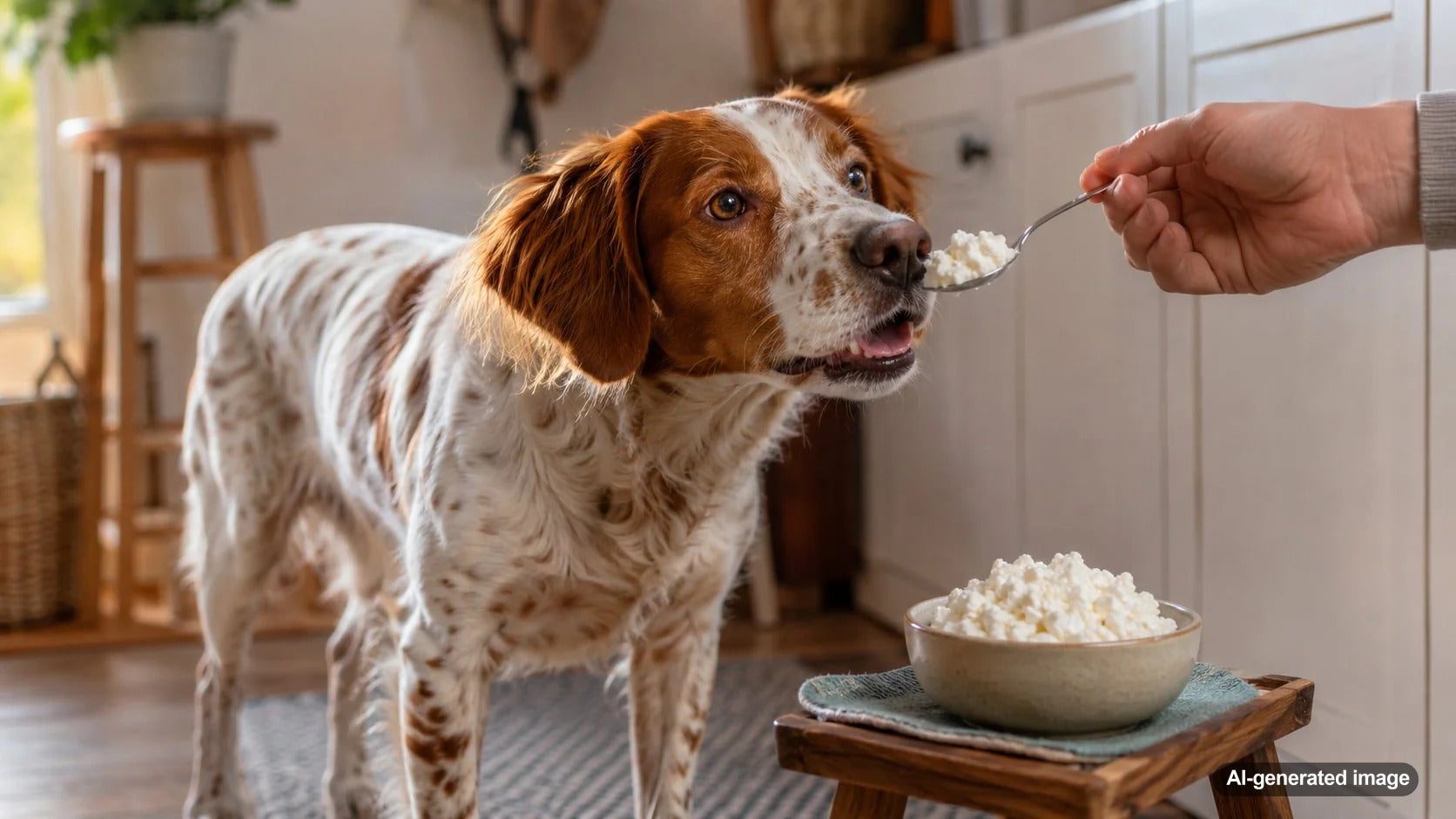
Cottage cheese may look like an easy snack to share when your dog is staring hopefully at the refrigerator, but dairy can be tricky for canine stomachs. The simple answer is that many healthy dogs can eat a small amount of plain cottage cheese occasionally. The right portion, ingredient list, and your dog's individual tolerance all matter.
Cottage cheese can provide protein and calcium, and lower-fat varieties may contain less fat than many other cheeses. It is not necessary for a complete canine diet, though, and too much can add unwanted calories, sodium, and lactose.
Is Cottage Cheese Safe for Dogs?
Plain cottage cheese is not considered toxic to dogs. For a healthy dog without dairy sensitivity or a condition requiring a restricted diet, a small spoonful can be an occasional treat.
The main concern is lactose. Dogs produce less lactase, the enzyme used to digest milk sugar, after they are weaned. Some dogs handle a little cottage cheese without a problem, while others may experience digestive upset after only a small serving.
Fat and sodium also vary widely between brands. Full-fat cottage cheese can be too rich for dogs with sensitive stomachs, weight concerns, or a history of pancreatitis. Regular and flavored varieties may contain more salt or added ingredients than your dog needs.
How Much Cottage Cheese Can a Dog Eat?
There is no single serving that works for every dog. Treats and extras should remain a small part of a dog's overall diet, with most daily calories coming from complete and balanced dog food.
| Dog size | Conservative first taste | What to do next |
|---|---|---|
| Extra-small or small dog | About 1/4 teaspoon | Wait a day and watch for digestive changes |
| Medium dog | About 1/2 teaspoon | Increase only slightly if well tolerated |
| Large or extra-large dog | About 1 teaspoon | Keep it an occasional topping or treat |
These amounts are cautious starting points, not daily recommendations. A dog who tolerates dairy may be able to have a little more, but cottage cheese should not replace a meal or become a major source of nutrition.
How to Choose Dog-Friendly Cottage Cheese
Read the container carefully before letting your dog lick the spoon. The best option is plain cottage cheese with a short ingredient list.
Look for lower-fat and lower-sodium varieties when available. Avoid cottage cheese mixed with onion, garlic, chives, spicy seasonings, artificial sweeteners, or dessert-style flavorings. Onion, garlic, and chives are unsafe for dogs, and products containing xylitol must never be offered.
If your dog eats a prescription or veterinary diet, has kidney or heart concerns, needs strict sodium control, or has experienced pancreatitis, ask your veterinarian before adding cottage cheese or any other people food.
Signs Your Dog May Not Tolerate Dairy
A dog can enjoy the taste of cottage cheese and still have trouble digesting it. Watch your dog for several hours after the first taste and continue monitoring bathroom habits into the next day.
Digestive intolerance is different from a food allergy. Itching, recurring ear problems, facial swelling, hives, or other unusual reactions deserve veterinary guidance rather than repeated at-home testing.
Can Puppies and Senior Dogs Have Cottage Cheese?
Puppies can be more vulnerable to digestive disruption, especially while adjusting to a new home, food, or training routine. Introduce only one new food at a time and use a very small amount. Rich extras can also reduce a puppy's appetite for the balanced food needed for growth.
Senior dogs may tolerate cottage cheese, but age alone does not make it beneficial. Older dogs are more likely to have medical conditions, prescription diets, sensitive digestion, or calorie restrictions. Check with your veterinarian before making it a regular part of a senior dog's routine.
Easy Ways to Serve Cottage Cheese
Serve cottage cheese plain and chilled, without salt, oils, herbs, or sweeteners. A tiny spoonful can be used as a high-value reward, a light kibble topper, or an occasional enrichment ingredient.
For a slower activity, spread a thin layer across a FlipMat and let your dog work through the textured surface. You can also portion a small amount into a Pupsicle Treat Tray, freeze it, and offer the finished treat in The Pupsicle. Freezing makes the experience last longer, but it does not change the calories or lactose, so keep the portion modest.
When Cottage Cheese Is Better Left Off the Menu
Skip cottage cheese if your dog has reacted poorly to milk or cheese before. It is also best avoided unless your veterinarian approves it when your dog has pancreatitis, significant digestive disease, a dairy allergy, obesity, or a medically prescribed diet.
If your dog accidentally eats a large container, check the ingredient list and call your veterinarian for advice. The amount eaten, your dog's size, the product's fat and sodium content, and any added ingredients can affect the level of concern.
Dog Parent FAQs
Can dogs eat cottage cheese every day?
It is usually better as an occasional treat. Daily servings can add calories, sodium, and lactose while crowding out balanced nutrition.
Can dogs eat low-fat cottage cheese?
Many dogs can have a small amount of plain low-fat cottage cheese. Check the sodium level and introduce it gradually.
Can cottage cheese help a dog with an upset stomach?
Cottage cheese is sometimes included in veterinarian-directed bland diets, but it can worsen symptoms in lactose-sensitive dogs. Ask your veterinarian before using a homemade diet for vomiting or diarrhea.
Can dogs eat cottage cheese with fruit?
Plain cottage cheese is the safer choice. Prepared fruit varieties may contain added sugar, sweeteners, syrups, or ingredients that are unsuitable for dogs.
What should I do if cottage cheese gives my dog diarrhea?
Stop feeding it, provide access to fresh water, and contact your veterinarian if diarrhea continues, becomes severe, contains blood, or occurs with vomiting, pain, weakness, or loss of appetite.
The Bottom Line
Dogs can eat cottage cheese, but a cautious spoonful is far better than a full bowl. Choose plain, lower-fat, lower-sodium cottage cheese, start with a tiny serving, and pay attention to your dog's response. When dairy does not agree with your pup, there are plenty of dog-friendly rewards and enrichment options that can deliver just as much tail-wagging excitement.


