






































































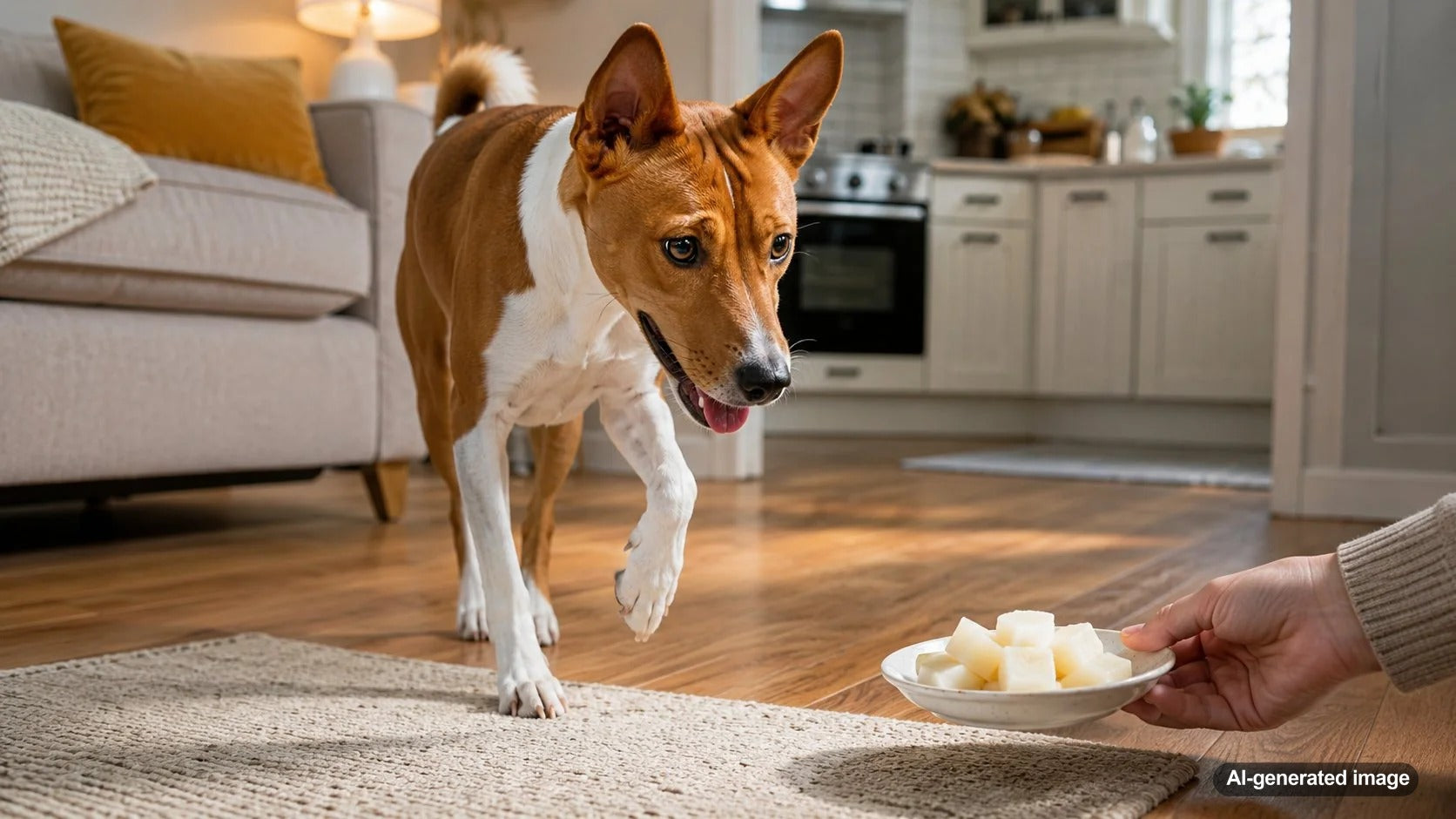
Can dogs eat cooked turnips? Yes, most healthy dogs can enjoy a small amount of plain, thoroughly cooked turnip as an occasional treat. Cooking softens this firm root vegetable, making it easier to chew and generally easier to digest than raw turnip, but preparation and portion size matter.
The turnips on your dinner plate may not be suitable for your dog if they were prepared with butter, cream, salt, garlic, onions, rich gravy, or other seasonings. The dog-friendly version should be wonderfully boring: washed, cooked until soft, cooled, and served plain.
Quick answer: Plain boiled, steamed, or baked turnip is generally safe for most dogs in small portions. Cut or mash it into an appropriate texture, introduce it gradually, and keep it within your dog's overall treat allowance. Ask your veterinarian before sharing it with a dog who has thyroid disease, follows a prescription diet, or has ongoing digestive problems.
Why Cooked Turnips Can Be a Dog-Friendly Treat
Turnips contain fiber, vitamin C, potassium, and other nutrients. They are also naturally low in fat when prepared without butter or oil. For a dog already eating a complete and balanced diet, however, turnips are an optional treat rather than a nutritional necessity.
The fiber may support normal digestion in a portion your dog tolerates, but more is not always better. A dog who raids a bowl of mashed turnips may end up with gas, loose stool, stomach discomfort, or vomiting. Cooking helps soften the vegetable, but it does not make an oversized serving easier on the stomach.
Turnips belong to the cruciferous vegetable family. They contain naturally occurring compounds that can affect thyroid function when consumed in significant or frequent amounts. An occasional bite is unlikely to be a concern for most healthy dogs, especially when cooked, but dogs with thyroid conditions should only receive turnips with veterinary approval.
How to Prepare Cooked Turnips for Your Dog
Wash the turnip, remove the tough stem and root end, and peel away any thick or waxy skin. Cut it into evenly sized pieces, then boil, steam, or bake it until a fork slides through easily. Allow the pieces to cool completely before offering them to your dog.
For small dogs, puppies, seniors, fast eaters, or dogs with missing teeth, mash the turnip or cut it into pieces no larger than a pea. Larger dogs can handle slightly bigger pieces, but every serving should still be small enough to reduce choking risk. Supervise the first tasting instead of dropping a large chunk into the bowl and walking away.
Begin with one tiny bite. If your dog has no vomiting, diarrhea, unusual gas, itching, or other concerning reaction over the next day, you can offer a modest amount another time. Treats and extras should generally account for no more than 10 percent of daily calories, with at least 90 percent coming from complete and balanced dog food.
Ingredients That Make Cooked Turnips Unsafe
Dogs should not share turnips cooked with onions, garlic, leeks, or chives. These ingredients belong to the allium family and can be toxic to dogs. Onion or garlic powder also counts, even when it is hidden in a seasoning blend, broth, casserole, or gravy.
Heavy butter, cream, cheese, bacon drippings, and large amounts of oil can turn a simple vegetable into a rich food that triggers digestive trouble. Excess salt is another reason to skip restaurant turnips, canned seasoned turnips, and leftovers when you do not know every ingredient.
When to call your veterinarian: Contact your vet if your dog develops repeated vomiting, significant diarrhea, abdominal swelling, weakness, excessive drooling, trouble swallowing, or another major change after eating turnips. Call promptly if the dish contained onion, garlic, or an unknown seasoning, and be ready to describe the ingredients and estimated amount eaten.
Can Cooked Turnips Be Used for Enrichment?
If your dog enjoys the earthy flavor, a veterinarian-approved spoonful of mashed turnip can add variety to an enrichment routine. Mix a little with water or a portion of your dog's regular wet food rather than adding salty broth, butter, or sweeteners.
For an easy portioning option, spread a thin layer into the Pupsicle Treat Tray and freeze it. The frozen treat can then be offered in The Pupsicle for supervised licking and mental engagement. Start with a small amount, especially if your dog has never eaten turnip, and count every added ingredient toward the daily treat allowance.
This can be particularly useful for dogs who gulp loose treats in seconds. Licking slows down the experience, but it does not make an unsuitable ingredient safe or replace the need for portion control.
Which Dogs Should Skip Cooked Turnips?
Check with your veterinarian before feeding turnips to a dog with thyroid disease, chronic digestive sensitivity, food allergies, kidney disease, diabetes, or another condition managed through diet. Dogs eating a prescription food should not receive new extras unless the veterinary team approves them.
Puppies and senior dogs may be able to eat cooked turnip, but both benefit from a softer texture and an especially cautious introduction. A puppy's small body leaves less room for nutritional extras, while a senior may have dental problems or a sensitive stomach that changes what is comfortable to eat.
Dog Parent FAQs
Can puppies eat cooked turnips?
Most healthy puppies can try a tiny piece of plain, soft turnip, but treats should not crowd out nutritionally complete puppy food. Ask your veterinarian if your puppy has a sensitive stomach or medical condition.
Can dogs eat raw turnips?
Raw turnip is not generally considered toxic, but its hard texture can be difficult to chew and digest. Cooked, softened turnip is the more practical option for most dogs.
Are mashed turnips safe for dogs?
Plain mashed turnips can be safe in moderation. Avoid versions containing butter, cream, salt, onion, garlic, gravy, or seasoning mixes.
What should I do if my dog eats too many turnips?
Monitor for gas, vomiting, diarrhea, discomfort, or appetite changes and contact your veterinarian if symptoms are persistent or severe. Seek guidance promptly if the turnips contained unsafe seasonings.
The Bottom Line on Cooked Turnips
Most healthy dogs can eat a little plain cooked turnip as an occasional treat. Keep the preparation simple, make the pieces appropriate for your dog's size, and introduce the vegetable one small taste at a time. Your dog's regular balanced food should remain the main event, while turnip serves as a bit of safe variety for pups who enjoy it.


