






































































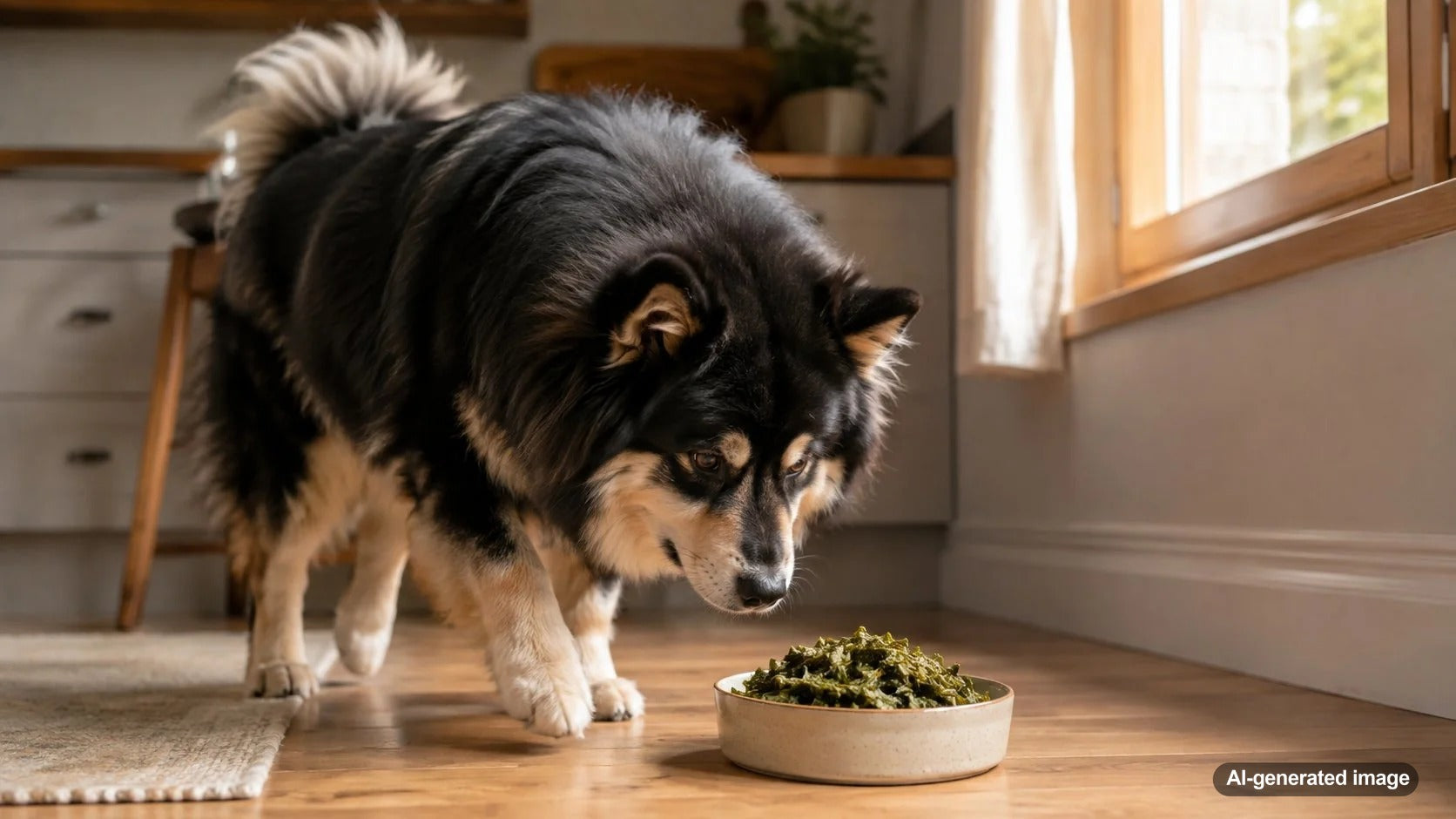
Cooked collard greens can be safe for many dogs when they are plain, tender, finely chopped, and served in a small amount. The important word is plain, because the traditional ingredients that make collards flavorful for people can make the dish unsuitable for dogs. Your pup should get a taste of the vegetable, not a helping of seasoned Southern-style greens.
Collards contain fiber and several nutrients, but dogs already eating complete and balanced food do not need leafy greens to fill a nutritional gap. Think of them as an occasional food topper or tiny treat rather than a necessary side dish.
When Are Cooked Collard Greens Safe for Dogs?
Collard greens are not generally considered toxic to dogs. Cooking softens their fibrous leaves, making them easier to chew and digest than raw collards. A little plain cooked leaf mixed into regular food may add flavor, texture, and fiber without significantly changing the meal.
That fiber can be useful in modest quantities, but more is not automatically better. A dog that eats a large pile of greens may develop gas, loose stool, stomach discomfort, or vomiting. Small dogs, puppies, seniors with sensitive digestion, and dogs trying a new food for the first time deserve especially conservative portions.
How to Prepare Collard Greens for Your Dog
Set aside your dog's portion before seasoning the family batch. Once onions, garlic, salty broth, bacon grease, ham, butter, hot sauce, or heavy seasoning enter the pot, the finished dish should stay off the dog menu.
- Wash the leaves thoroughly.
- Remove the thick center ribs and tough stems.
- Steam or boil the leaves in plain water until tender.
- Drain them and let them cool completely.
- Chop the leaves into small pieces that suit your dog's size.
- Offer a tiny amount by itself or mix it into regular food.
Do not add salt, oil, butter, sauces, or sweeteners. Avoid canned collard greens unless the label confirms that they contain no problematic seasonings and very little sodium. Fresh or frozen plain leaves give you much better control over the ingredients.
How Much Can Your Dog Have?
There is no universal serving size because dogs vary in size, health, diet, and digestive tolerance. For a first taste, one small chopped piece is enough for a toy or small dog. A medium or large dog can start with one or two small spoonfuls. Watch your dog for the rest of the day before offering the food again.
Collards should remain an occasional extra, and all treats and toppers combined should generally make up no more than about 10 percent of a dog's daily calories. Keeping extras limited protects the nutritional balance of the dog's regular food.
If your dog likes food-based enrichment, you could blend a very small amount of plain cooked collard leaf with a familiar dog-safe ingredient, portion it in the Pupsicle Treat Tray, and freeze it. Use the resulting treat only if every ingredient agrees with your dog, and supervise enrichment time.
Ingredients That Make Collard Dishes Unsafe
The vegetable itself is often not the biggest concern. Recipes made for people commonly include ingredients dogs should not share.
- Onion, garlic, shallots, leeks, or onion and garlic powders
- Bacon, ham, smoked meat, or rich meat drippings
- Large amounts of salt or salty broth
- Hot peppers, spicy sauces, or seasoning blends
- Excess butter, grease, or cooking oil
Onion and garlic can damage a dog's red blood cells, including when cooked or powdered. Fatty meat and grease may trigger significant digestive trouble, while heavily salted foods are especially risky in large amounts. If you do not know exactly what went into a prepared dish, do not feed it to your dog.
Which Dogs Should Avoid Collard Greens?
Collards contain naturally occurring compounds, including oxalates, that may be inappropriate for some dogs with urinary or kidney concerns. Dogs with a history of calcium oxalate stones, bladder stones, kidney disease, or a prescription urinary diet should not receive collards unless their veterinarian approves them.
Ask your veterinarian before offering collards to a dog with thyroid disease, chronic digestive problems, pancreatitis, food sensitivities, or any condition managed through diet. The same caution applies to puppies on carefully balanced growth diets. A vegetable topper should never interfere with prescribed nutrition.
What to Watch After the First Taste
After introducing collards, watch for gas, repeated lip licking, vomiting, diarrhea, reduced appetite, abdominal discomfort, or unusual tiredness. Stop serving the greens if your dog seems uncomfortable. Contact your veterinarian if symptoms are persistent, severe, or accompanied by weakness, repeated vomiting, swelling, excessive drooling, or trouble breathing.
If your dog stole seasoned collards containing onion or garlic, call your veterinarian or an animal poison-control service promptly. Do not wait for symptoms or attempt to make your dog vomit unless a veterinary professional specifically instructs you to do so.
Dog Parent FAQs
Can dogs eat raw collard greens?
A tiny piece is unlikely to trouble many healthy dogs, but raw collards are tough and harder to digest. Plain cooked leaves are the more practical option.
Can dogs eat collard green stems?
It is better to remove the thick stems and ribs. They are fibrous, difficult to chew, and more likely than tender leaves to cause digestive discomfort or become a choking concern.
Can dogs eat collard greens cooked with bacon?
No. Bacon, grease, salt, and common recipe seasonings make traditional prepared collards a poor choice for dogs.
Can puppies eat cooked collard greens?
A tiny amount of plain cooked leaf may be tolerated, but puppies need carefully balanced food for growth. Ask your veterinarian before making human-food toppers part of a puppy's routine.
The Bottom Line
Yes, many dogs can eat cooked collard greens, but the safest serving is small, soft, chopped, and completely unseasoned. Keep the tough stems and seasoned pot leftovers away from your pup, introduce the food slowly, and treat it as an occasional extra. When your dog has a medical condition or follows a special diet, let your veterinarian make the final call.


