






































































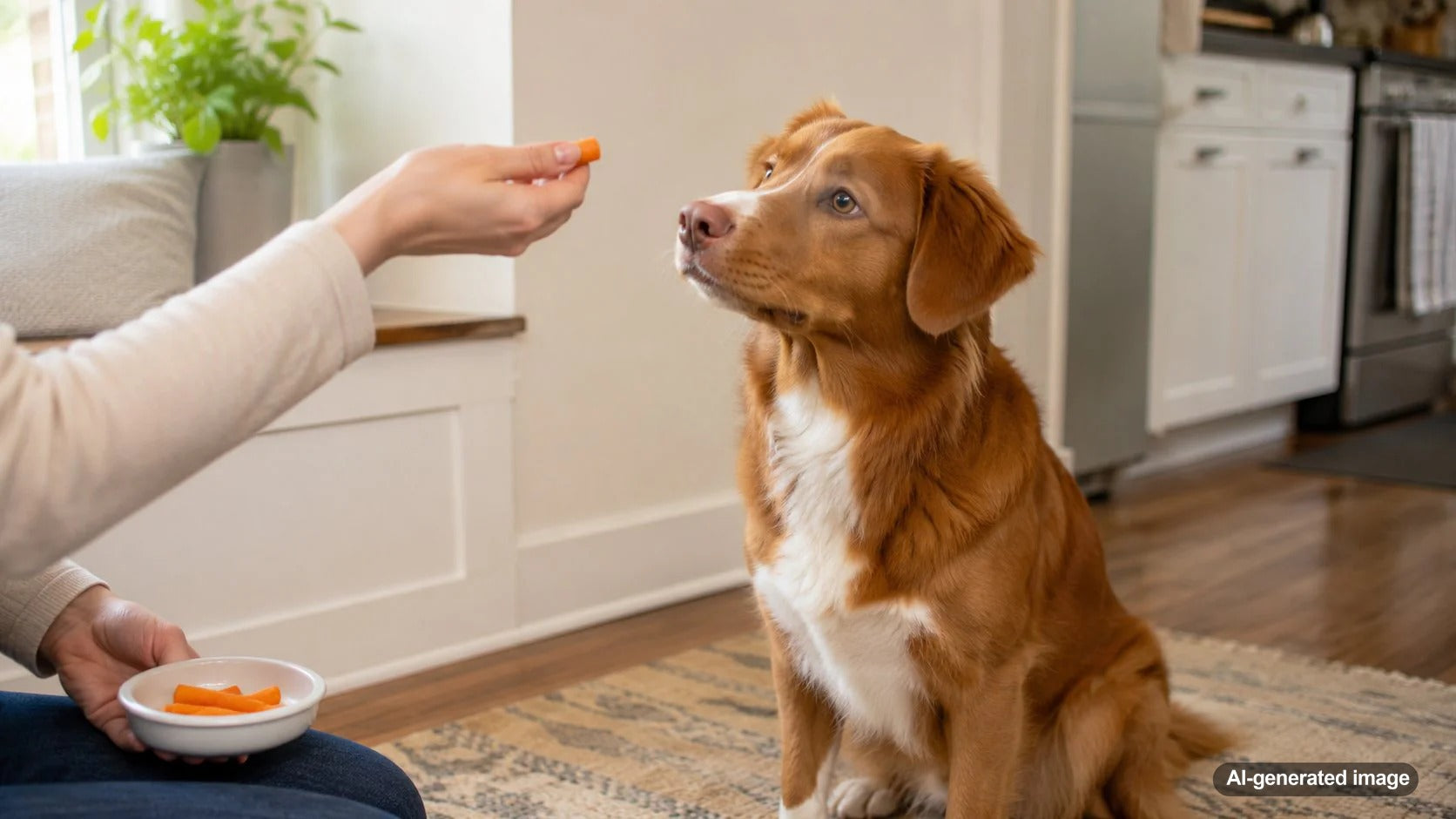
Cooked carrots can absolutely earn a spot in your dog's training treat rotation, as long as they are plain, soft, chopped small, and served in moderation. They are naturally sweet, low in fat, easy to portion, and often exciting enough for everyday cues like sit, stay, touch, and recall practice around the house. Still, they are not the perfect reward for every dog or every training situation, so it helps to know when cooked carrots work beautifully and when a more high-value treat makes more sense.
If your dog loves crunchy vegetables, cooked carrots may feel like a tiny jackpot. If your dog spits them out, sniffs them politely, or only works for meaty rewards, that is normal too. Training treats should be safe, easy to eat, and motivating enough for the behavior you are asking for.
Why Cooked Carrots Can Work Well for Training
Cooked carrots are soft, mild, and easy for many dogs to chew, which makes them especially useful for dogs who struggle with harder snacks. Puppies with small mouths, senior dogs with sensitive teeth, and dogs who need lighter rewards may do well with small pieces of cooked carrot.
They are also helpful when you want lots of repetitions without relying only on richer treats. For example, if you are practicing leash check-ins in the hallway, rewarding calm behavior before dinner, or teaching your dog to settle on a mat, tiny cooked carrot pieces can keep the session moving without feeling too heavy.
The biggest training advantage is portion control. One cooked carrot can be diced into many little rewards, which is exactly what you want for short, upbeat sessions. Dogs learn faster when rewards are delivered quickly, so small pieces beat large chunks every time.
How to Prepare Cooked Carrots Safely for Dogs
Keep cooked carrots boring in the best possible way. Steam, boil, or bake them until they are tender, then let them cool completely before offering them to your dog. Skip seasonings and extras. Ingredients that seem harmless on a human dinner plate can be too salty, too rich, or unsafe for dogs.
Use plain carrots only.
Cut them into small, soft pieces before training.
Let them cool fully so they do not burn your dog's mouth.
Start with a small amount to see how your dog's stomach handles them.
Ask your veterinarian first if your dog has diabetes, digestive issues, a prescription diet, or a medical condition.
For tiny dogs, think very small dice. For medium and large dogs, pieces should still be small enough to swallow easily during training. Training is not the time for big bites, because dogs are often excited and moving quickly.
Cooked Carrots vs. Regular Training Treats
Cooked carrots are useful, but they are not always the strongest motivator. A quiet kitchen session is different from practicing recall at the park, greeting visitors, or walking past another dog. In more distracting environments, many dogs need a reward that smells richer and feels more exciting.
| Treat type | Best for | Watch out for |
|---|---|---|
| Cooked carrots | Low-key training, gentle rewards, light snack rotation, dogs who enjoy vegetables | Can be too low-value for distractions, may cause soft stool if overfed |
| Bite-sized training treats | New skills, outdoor practice, recall, higher-focus sessions | Use small pieces and keep total treats reasonable |
| Frozen carrot-based enrichment | Quiet time, licking, settling, crate practice, rainy-day boredom | Supervise, size appropriately, and avoid hard frozen chunks for aggressive gulpers |
For dogs who need a bigger reason to listen, Love Nuggets can be a handy option because they are bite-sized training treats made for quick rewarding. Cooked carrots can still be part of the routine, especially for easier cues or as a lighter mix-in between higher-value rewards.
How Many Cooked Carrots Can a Dog Have?
There is no one-size-fits-all number because dogs vary by size, activity level, health, and diet. A few tiny pieces during training may be plenty for a small dog. A larger dog may be able to enjoy more, but moderation still matters.
A simple rule is to keep carrots and all other treats as a small part of your dog's daily intake. If your dog is gaining weight, having loose stool, acting gassy, vomiting, or showing appetite changes, pause the new treat and check with your veterinarian.
Carrots contain fiber and natural sugar, so more is not always better. Too many can upset your dog's stomach, especially if your pup is not used to vegetables. Introduce them the same way you would introduce any new food: slowly, in small amounts, and with an eye on how your dog feels afterward.
When Cooked Carrots Are Not the Best Training Treat
Cooked carrots are not ideal for every dog. Some dogs simply do not find them exciting. Others get so amped during training that they gulp without chewing. In those cases, smaller pieces, slower delivery, or a different reward may be safer and more effective.
Skip cooked carrots if they were prepared with garlic, onion, butter, heavy oil, salt, sweet glaze, spicy seasoning, or sauces. Avoid carrot cake, candied carrots, and anything made with xylitol or unknown ingredients. If your dog has a history of pancreatitis, diabetes, food sensitivities, or a restricted diet, your veterinarian can help you decide whether carrots make sense.
Smart Ways to Use Cooked Carrots in Training
Use cooked carrots where they fit best. Try them for easy wins like name recognition, hand targeting, place training, polite sitting before meals, and rewarding calm behavior while you answer the door. Keep sessions short and upbeat so your dog stays interested.
You can also mash plain cooked carrot and spread a thin layer into an enrichment toy or freeze it into a soft homemade refill. For longer-lasting licking, the Pupsicle Treat Tray can help you make freezer-ready homemade treats that fit The Pupsicle, which is useful when your dog needs quiet enrichment rather than fast training reps.
Dog Parent FAQs
Can puppies eat cooked carrots as training treats?
Many puppies can have tiny pieces of plain cooked carrot, but keep the pieces very small and soft. Introduce them slowly, and ask your vet if your puppy has a sensitive stomach or special diet needs.
Are raw or cooked carrots better for dogs?
Both plain raw and cooked carrots can be safe for many dogs. Cooked carrots are softer and easier to chew, while raw carrots are crunchier and should be cut carefully to reduce choking risk.
Can cooked carrots help clean my dog's teeth?
Cooked carrots are too soft to do much for teeth. Dental care is best supported with tooth brushing, vet guidance, and dog-safe dental routines designed for chewing or cleaning support.
Can dogs eat carrots every day?
Some dogs can enjoy small amounts regularly, but carrots should stay in the treat category. If daily carrots cause gas, soft stool, weight gain, or appetite changes, cut back and check with your veterinarian.
The Bottom Line on Cooked Carrots for Training
Cooked carrots can be a safe, useful, and budget-friendly training treat for many dogs when they are plain, soft, chopped small, and served in moderation. They shine during simple practice sessions and gentle reward routines, especially for dogs who enjoy vegetables.
For tougher training moments, do not be afraid to use a higher-value reward. The best treat is the one that is safe for your dog, easy for you to repeat, and motivating enough to help your pup understand what you want. Carrots can be one smart tool in that treat pouch, not the whole training plan.


