






































































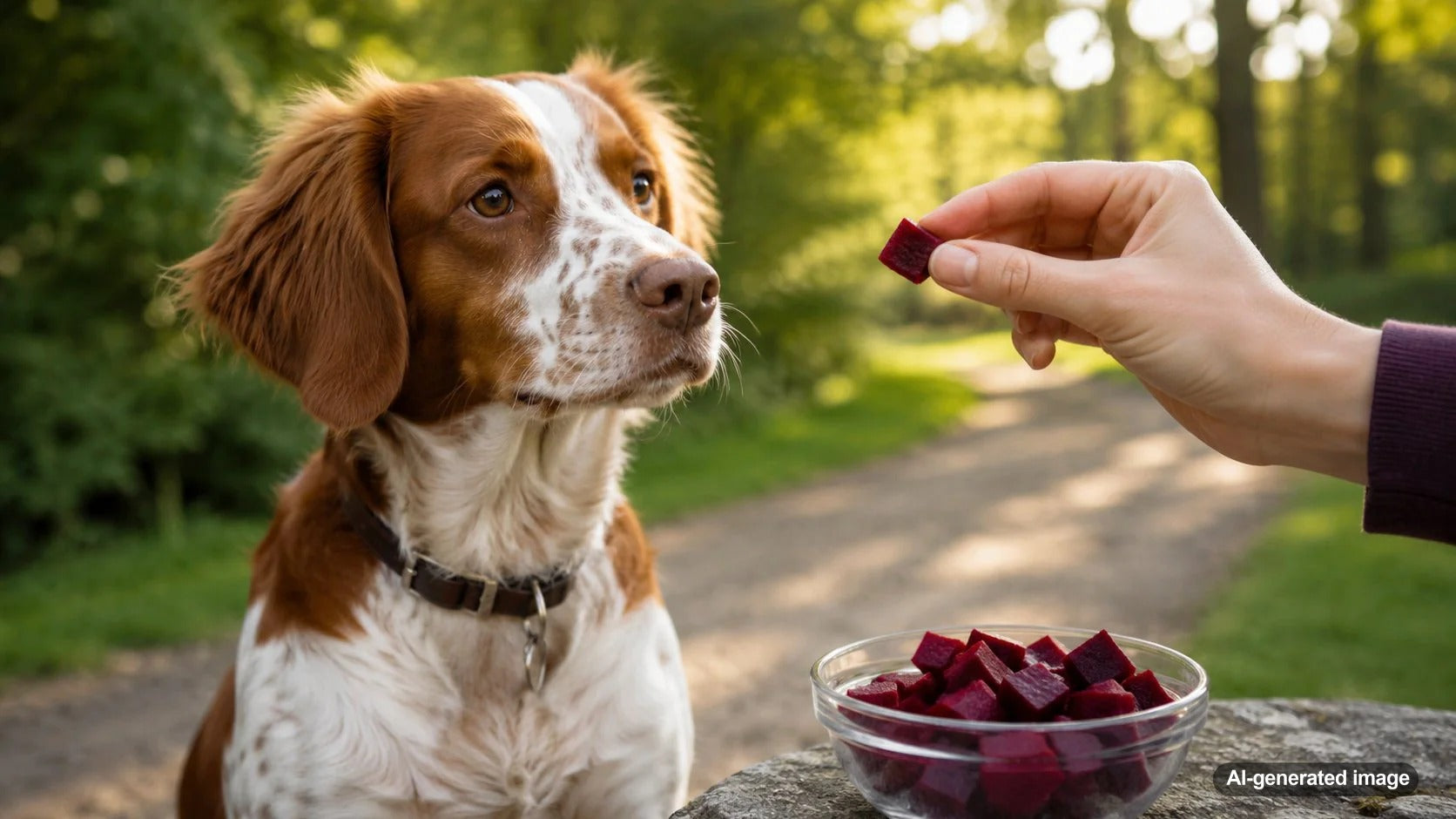
Yes, dogs can eat cooked beets when they are served plain, prepared safely, and offered in small amounts. Cooked beets are not toxic to dogs, and their softer texture is usually easier to chew and digest than raw beet chunks. Still, they should be treated as an occasional extra rather than a major part of your dog's meals.
That bright red color can make beets look a little dramatic in the bowl, and later in the yard. Beet pigments may temporarily tint a dog's stool or urine pink or red, which can surprise dog parents. Because blood in urine or stool can also signal a medical problem, contact your veterinarian if the discoloration continues, appears without a known beet snack, or comes with straining, pain, lethargy, vomiting, or other concerning symptoms.
Are Cooked Beets Good for Dogs?
Cooked beets contain fiber and naturally occurring nutrients such as folate, potassium, and manganese. However, a complete and balanced dog food should already provide the nutrition your dog needs. Beets are best viewed as a colorful occasional treat, food topper, or enrichment ingredient, not a supplement or nutritional necessity.
The fiber may support normal digestion for some dogs, but more is not always better. A dog that is not used to fibrous vegetables may develop gas or loose stool after eating too much. Small dogs, puppies, seniors, and dogs with sensitive stomachs often need especially modest portions.
How to Prepare Cooked Beets Safely
Wash the beet thoroughly, remove the tough skin, and cook it until soft by boiling, steaming, or roasting without added ingredients. Let it cool completely, then mash it or cut it into pieces appropriate for your dog's size. Large slippery chunks can be a choking risk, especially for enthusiastic gulpers.
- Use fresh, plain beets.
- Cook until fork-tender.
- Peel and cool before serving.
- Mash or dice into small pieces.
- Offer a tiny first taste.
- Refrigerate leftovers promptly and discard spoiled food.
For a longer activity, you can blend a small amount of cooked beet with a dog-safe base your pet already tolerates, spoon it into the Pupsicle Treat Tray, and freeze it. Keep beet as a minor ingredient so the treat remains appropriately portioned. Its strong pigment can stain fabric and light-colored rugs, so frozen beet enrichment is often easiest to serve on a washable surface.
How Much Cooked Beet Can a Dog Eat?
There is no single portion that fits every dog. Body size, daily calorie needs, health history, and tolerance all matter. For a first taste, try roughly a pea-sized amount for a very small dog, one or two small cubes for a medium dog, or a few small cubes for a large dog. Wait and see how your dog responds before offering more on another day.
All treats and extras combined should remain a small part of the daily diet. Beets contain natural sugar and carbohydrates, so generous servings can add unnecessary calories. Dogs managing weight concerns, diabetes, gastrointestinal disease, or a prescription diet should only receive new foods with veterinary guidance.
When Dogs Should Avoid Beets
Beets are relatively high in oxalates. Dogs with a history of calcium oxalate urinary crystals, bladder stones, or kidney stones may need to avoid high-oxalate foods, including beets. Ask your veterinarian before sharing them if your dog has urinary tract disease, kidney concerns, calcium-related conditions, or a specially formulated diet.
Avoid pickled beets because they may contain excessive salt, sugar, onions, garlic, or spices. Beet dishes made for people may also include butter, rich sauces, or sweeteners that do not belong in a dog's treat. Canned beets are only a reasonable option when the ingredient list is plain and there is no added salt, seasoning, or sweetener.
Easy Ways to Serve Beets Without Overdoing It
Use a teaspoon-sized smear of mashed beet as a food topper, mix a tiny amount into a familiar dog-safe recipe, or spread a thin layer on FlipMat for supervised licking enrichment. Combining a new ingredient with a familiar routine can make it easier to control the serving and notice whether your dog's digestion changes.
Do not introduce several new foods at once. When only one ingredient is new, it is much easier to identify what caused an upset stomach. Keep a mental note of the portion, especially if multiple family members hand out snacks.
Dog Parent FAQs
Can dogs eat boiled beets?
Yes. Plain boiled beets are soft and easy to portion. Do not add salt, butter, oil, garlic, onion, or seasoning.
Can dogs eat roasted beets?
Yes, as long as they are roasted plain, cooled, peeled, and cut into small pieces. Avoid beets cooked with oil or seasonings.
Can dogs eat beet greens?
Beet greens also contain oxalates and may upset some dogs' stomachs. It is safest to skip them, especially for dogs with urinary or kidney concerns.
Can cooked beets make dog poop red?
Yes. Beet pigments can temporarily tint stool or urine. Contact your veterinarian if the color persists or appears with pain, straining, weakness, vomiting, or other symptoms.
Can puppies eat cooked beets?
A healthy puppy may have a very small taste, but puppies have sensitive digestive systems and specific nutritional needs. Ask your veterinarian before making people food a regular part of puppy treats.
The Bottom Line on Cooked Beets for Dogs
Cooked beets can be a safe, colorful treat for many dogs when they are plain, soft, and served sparingly. Start small, avoid seasoned or pickled versions, and pay attention to your dog's stomach and bathroom habits. For dogs with urinary stones, kidney issues, diabetes, prescription diets, or ongoing digestive trouble, check with your veterinarian before adding beets to the menu.


