






































































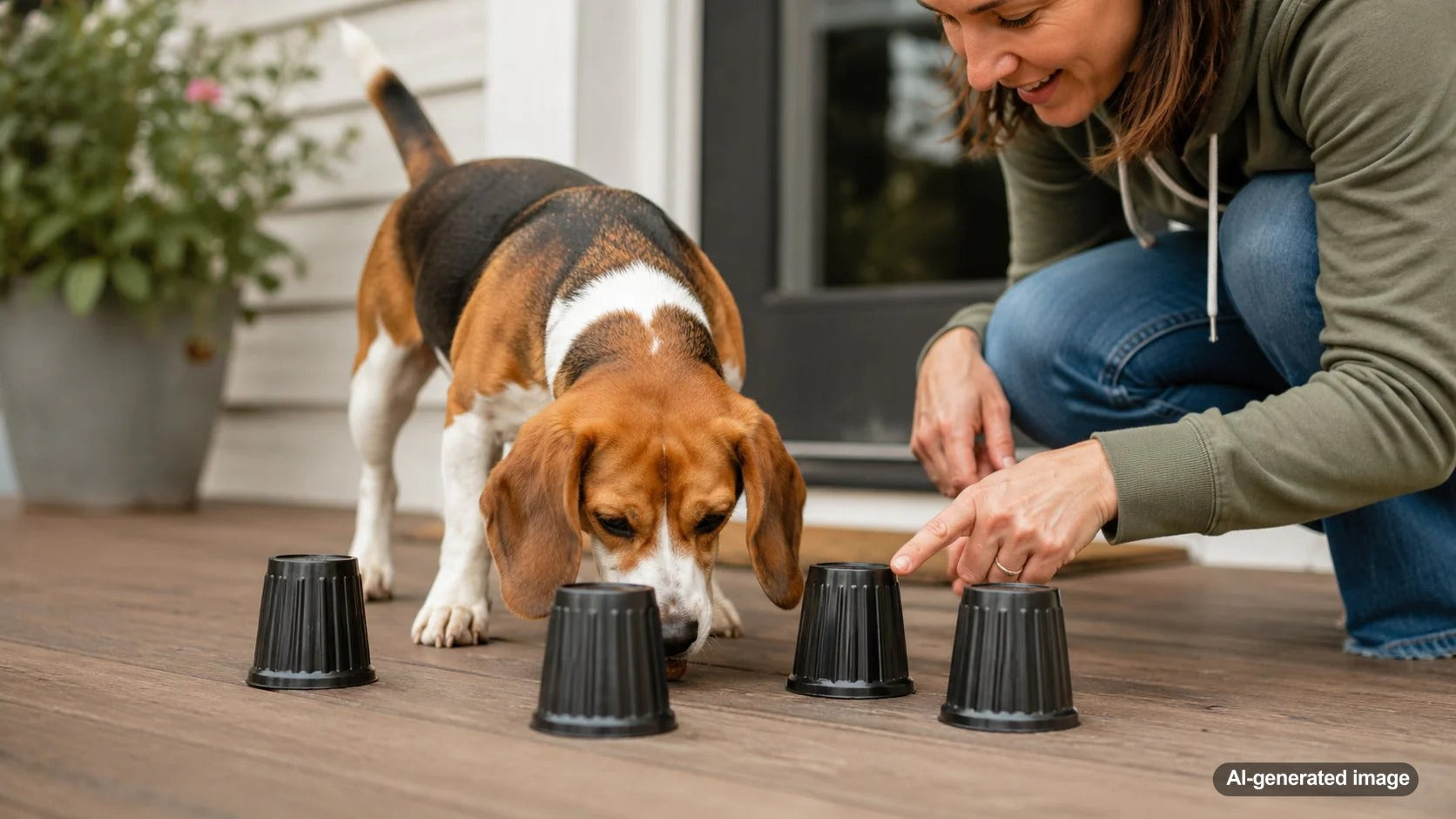
Some dogs seem to experience the world nose-first. They zigzag across the yard, investigate every grocery bag, and detect a dropped crumb long before anyone else notices it. Breeds developed to track, hunt, retrieve, or locate hidden targets often take especially well to scent-based games, but nearly any dog can enjoy putting their nose to work.
Scent games give dogs permission to use one of their strongest natural abilities. They can provide meaningful mental stimulation without requiring a huge yard, complicated equipment, or a marathon exercise session.
Quick answer: Beagles, Bloodhounds, Basset Hounds, coonhounds, Labrador Retrievers, German Shepherd Dogs, Belgian Malinois, spaniels, pointers, and Lagotto Romagnolos commonly thrive with scent-based games. Mixed-breed dogs and breeds not traditionally associated with scenting can be excellent at them too. Interest, confidence, motivation, and practice matter more than pedigree.
Why Certain Breeds Love Nose Work
Every dog can smell far more effectively than a human, but generations of selective breeding encouraged certain dogs to follow odor trails, locate birds, retrieve game, identify people, or search large areas. Those instincts do not disappear just because a dog now sleeps on the couch.
A scent game gives that natural drive a safe, structured outlet. Instead of following a rabbit trail under the fence or searching the kitchen counters for leftovers, a dog can hunt for a hidden treat, identify the correct box, or follow a short trail created by their owner.
Breed tendencies are only a starting point. One Beagle may search with intense determination, while another would rather nap. A mixed-breed rescue with no obvious scent-hound ancestry may become the household's most enthusiastic detective.
Scent Hounds: Built to Follow a Trail
Beagles, Bloodhounds, Basset Hounds, coonhounds, Foxhounds, and other scent hounds are obvious candidates. These dogs were developed to follow odor over distance, often while working independently from the handler.
In real life, that can look like a dog becoming completely absorbed in one patch of grass or appearing to forget their name when an interesting trail crosses the sidewalk. During a game, that persistence becomes an advantage.
Start with scattered treat searches, cardboard-box searches, or a short food trail across the floor. Avoid making the first challenge too difficult. Scent hounds may be talented, but they still need to learn the rules of your particular game.
Retrievers and Spaniels: Eager Search Partners
Labrador Retrievers, Golden Retrievers, Chesapeake Bay Retrievers, Cocker Spaniels, English Springer Spaniels, and similar sporting breeds often combine strong noses with a desire to work alongside people.
Many enjoy games that end with retrieving an object. Hide a favorite toy behind furniture, place a treat inside one of several boxes, or ask your dog to find a specific item carrying your scent. Their enthusiasm can make training fun, but excited dogs may rush and use their eyes before their noses. Dim the room slightly, hide objects out of sight, or use identical containers to encourage careful sniffing.
Working and Herding Breeds: Focused Problem Solvers
German Shepherd Dogs, Belgian Malinois, Dutch Shepherds, Doberman Pinschers, Border Collies, and Australian Shepherds frequently enjoy structured challenges. Many have the focus, stamina, and trainability needed for increasingly complex searches.
These dogs can also become frustrated when they expect constant direction. In scent work, the dog needs room to solve the problem. Give the search cue, stay quiet, and resist pointing toward the hiding place. Learning to trust the dog's nose is part of the game for the human too.
Specialists With Remarkable Scenting Heritage
The Lagotto Romagnolo is famous for searching for truffles and often approaches scent games with cheerful concentration. Pointers and setters may enjoy locating hidden targets, especially when searches include outdoor air movement. Terriers and Dachshunds can also be determined searchers because many were developed to locate animals around or below ground.
These breeds may search differently. A hound might keep its nose close to the floor, while another dog lifts its head to catch odor moving through the air. Neither style is automatically better. Watch how your dog naturally works.
Do Small Dogs, Seniors, and Puppies Enjoy Scent Games?
Absolutely. Scent-based enrichment is easy to adapt to different bodies and life stages.
- Puppies: Use simple, brief searches with easy wins. Keep objects too large to swallow and prevent chewing on boxes or containers.
- Small dogs: Place hides at nose level instead of expecting them to reach tall furniture or deep containers.
- Senior dogs: Use nonslip flooring and accessible hiding places. Gentle nose work can provide engagement without demanding high-impact movement.
- Dogs with limited mobility: Create a compact search area and avoid stairs, slippery surfaces, or awkward reaching.
Stop if your dog seems tired, worried, or physically uncomfortable. Sudden reluctance to sniff, eat, bend down, or move around may warrant a conversation with your veterinarian.
Three Easy Scent Games to Try
1. Find the Treat
Ask your dog to wait while you place a few small treats around one room. Begin with treats partly visible, release your dog with a consistent cue such as "find it," and gradually make the hiding places less obvious.
2. Pick the Right Box
Arrange three open cardboard boxes and place a treat in one. Let your dog investigate without guiding them. Reward the moment they locate the correct box, then rearrange the boxes for another round.
3. Follow the Food Trail
Drag a strongly scented treat along the floor for a few feet, leaving tiny reward pieces at intervals and a larger reward at the end. Keep the trail short until your dog understands the assignment.
Helpful tip: Use tiny rewards so the game does not accidentally become a second dinner. Woof's bite-sized Woof Puzzle Treats can fit naturally into treat searches and interactive games. For a ready-made challenge that encourages sniffing, movement, and problem-solving, the rolling Walkabout can turn part of a meal into a longer activity.
Common Mistakes That Make Scent Games Less Fun
Owners often make searches too difficult too quickly. If your dog repeatedly gives up, simplify the setup and let them succeed. Another common mistake is helping too much by staring at, pointing toward, or standing beside the hiding place.
Keep sessions short and finish while your dog still wants another turn. Two or three successful searches can be more satisfying than a long session that ends in frustration. Always supervise games involving food, toys, boxes, or small objects, and avoid using essential oils or specialized target odors without guidance from a qualified scent-work instructor.
Dog Parent FAQs
Are scent games only for hunting breeds?
No. Hunting and working breeds may show strong natural interest, but dogs of every size, breed, and background can enjoy scent games.
How long should a scent-game session last?
Beginners may need only three to five minutes. End before your dog loses focus, and gradually add difficulty rather than making sessions much longer.
Can scent games calm a high-energy dog?
Focused sniffing may help many dogs feel mentally satisfied and ready to settle, but it should complement appropriate exercise, rest, training, and social time.
What if my dog cannot find the hidden treat?
Move it closer, make it partly visible, or let your dog watch you place it. Easy wins build confidence and teach the rules of the game.
Let Your Dog Lead With Their Nose
Breeds with a history of tracking, hunting, retrieving, or detection often shine during scent-based games, but the best way to discover your dog's ability is simply to try. Begin with an easy search, stay quiet while they investigate, and celebrate the find. You may discover that the dog you thought was merely nosy has been waiting for a job worthy of that remarkable nose.


