






































































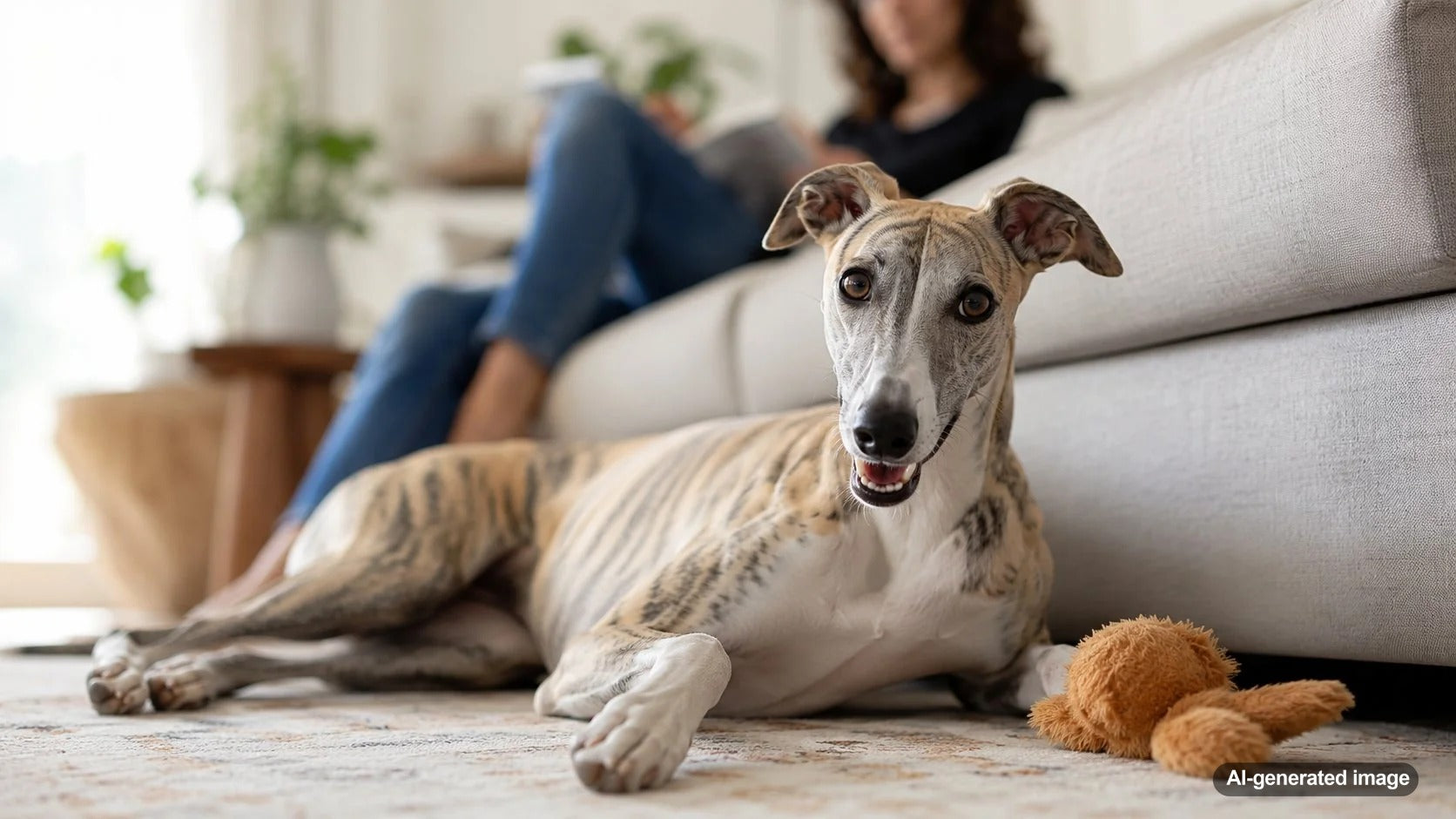
Some dogs seem to have mastered the perfect relationship balance: deeply devoted to their people, genuinely happy to spend time together, but not convinced they need to follow you into the bathroom. If you love the idea of a dog who forms a strong family bond while still having an independent streak, certain breeds may be especially appealing. Breed tendencies are never guarantees, but genetics, early socialization, training, age, and individual personality can all influence how closely a dog sticks to their favorite humans.
For many dog parents, the sweet spot is not an aloof dog or a canine shadow. It is a companion who enjoys affection, notices when you leave the room, happily joins family activities, and can also relax independently when nothing exciting is happening.
1. Greyhound
Greyhounds are often a pleasant surprise for people who assume an athletic dog must constantly demand entertainment. They are known for being gentle companions with an independent side, and many are perfectly content to spend a good portion of the day lounging after their exercise needs have been met.
A Greyhound may happily curl up near you without insisting on occupying your lap or participating in every household movement. Their combination of affection and independence can make them appealing to owners who want companionship without nonstop attention seeking.
2. Whippet
Whippets are closely related in type to Greyhounds, but they bring their own combination of sweetness, athleticism, and calm indoor behavior. Many enjoy physical affection and being close to family, yet a well-exercised adult Whippet can also become an accomplished couch lounger.
The important distinction is between independence and insufficient exercise. A bored young Whippet may invent activities you never approved, while a dog whose needs for running, sniffing, training, and play are satisfied is more likely to settle comfortably.
3. Borzoi
Borzois are affectionate with their owners while also being known for an independent nature. That can create an interesting relationship: they may adore their family without behaving as though every human movement requires canine supervision.
Their independence also means training should be approached thoughtfully. Short, rewarding sessions generally make more sense than repetitive drilling. Owners should also remember that sighthounds can have strong instincts to chase moving animals, so secure areas and appropriate leash management matter.
4. Shiba Inu
The Shiba Inu has become famous for having opinions, and that reputation is not entirely accidental. These compact dogs can form meaningful bonds with their people while remaining notably self-directed. A Shiba may want to know what the family is doing without necessarily demanding constant cuddling.
That independence is not the same thing as being low maintenance. Shibas benefit from early socialization, reward-based training, appropriate exercise, and plenty of mental engagement. They can also be clever about finding their own entertainment, so enrichment is especially useful when the household needs some quiet time.
5. Scottish Terrier
Scottish Terriers have the classic terrier combination of loyalty, confidence, and independence. A Scottie can be extremely invested in the household while still possessing enough self-assurance to entertain themselves or settle nearby rather than permanently attaching themselves to your ankle.
Like many terriers, they may also bring determination and strong preferences to training. Keeping sessions upbeat and rewarding can help turn that independent thinking into cooperation instead of a debate between dog and human.
6. Tibetan Spaniel
Tibetan Spaniels were developed as companion and watchdog-style dogs, and many combine attentiveness to their household with a surprisingly independent personality. They often like having a good observation point where they can watch what is happening without needing to be physically involved in every second of it.
For someone seeking a smaller companion, that balance can be attractive. Still, small size does not automatically mean small enrichment needs. Short walks, sniffing opportunities, training games, and food-based activities can help create a satisfying daily routine.
7. Rhodesian Ridgeback
Rhodesian Ridgebacks can be deeply devoted family dogs while maintaining a confident, self-possessed nature. They are powerful, athletic dogs, however, so independence is only an advantage when it is paired with thoughtful training, socialization, exercise, and appropriate management.
A mature Ridgeback with a well-established routine may be happy to relax while you work or handle household tasks. Puppies and adolescents are another story. Young dogs of almost any breed typically require substantially more supervision, activity, training, and guidance than settled adults.
Breed Tendencies Are Only the Starting Point
Two dogs of the same breed can have dramatically different ideas about personal space. One may sleep peacefully across the room while a sibling wants permanent contact with someone's leg. Early experiences, household routine, reinforcement history, age, health, exercise, and temperament all matter.
It is also worth distinguishing ordinary affection from a sudden behavior change. If a normally independent dog suddenly becomes unusually attached, restless, withdrawn, unwilling to be alone, or shows changes in appetite, mobility, sleep, or behavior, contact your veterinarian. New clinginess can sometimes accompany discomfort or other health concerns.
How to Encourage Healthy Independence
Even naturally independent dogs benefit from learning how to settle. Start with manageable periods when your dog is already calm rather than waiting until they are bursting with energy. A sniff-heavy walk, a short training session, or an enrichment activity can make the transition into downtime easier.
Food enrichment can be particularly convenient when you need your dog happily occupied nearby. The Pupsicle is an interactive treat toy designed for longer-lasting licking and engagement, which can make it a useful part of a calm-at-home routine. For dogs who prefer movement and problem solving, Walkabout turns kibble or treats into a rolling slow-feeder puzzle game.
Supervise new enrichment activities until you understand how your dog interacts with them, choose appropriately sized products, and adjust the difficulty if your dog becomes frustrated rather than engaged.
Dog Parent FAQs
Does an independent dog still bond strongly with its owner?
Absolutely. Independence describes how comfortable a dog may be functioning or relaxing without constant interaction. It does not mean the dog cannot develop a deep relationship with its family.
Are independent breeds easier to leave alone?
Not automatically. Any dog can struggle with being alone, and puppies need especially careful preparation. Build alone time gradually and seek help from a qualified trainer or veterinary behavior professional if your dog shows significant distress.
Can you teach a clingy dog to be more independent?
You can often encourage calmer independent behavior through predictable routines, comfortable resting spaces, enrichment, gradual alone-time practice, and rewarding relaxed behavior. Sudden or extreme clinginess should be discussed with your veterinarian.
Should breed be the main factor when choosing a dog?
No. Breed tendencies can help narrow your search, but the individual dog's temperament, age, history, energy level, training needs, and fit with your lifestyle are just as important.
The Best Bond Has Room to Breathe
A dog does not need to be attached to your hip to be devoted to you. For the right household, a dog who enthusiastically greets you, enjoys adventures and affection, and then comfortably settles into their own space can feel like the ideal companion. Focus on the individual in front of you, create routines that meet their physical and mental needs, and give your dog opportunities to learn that closeness and independence can happily coexist.


