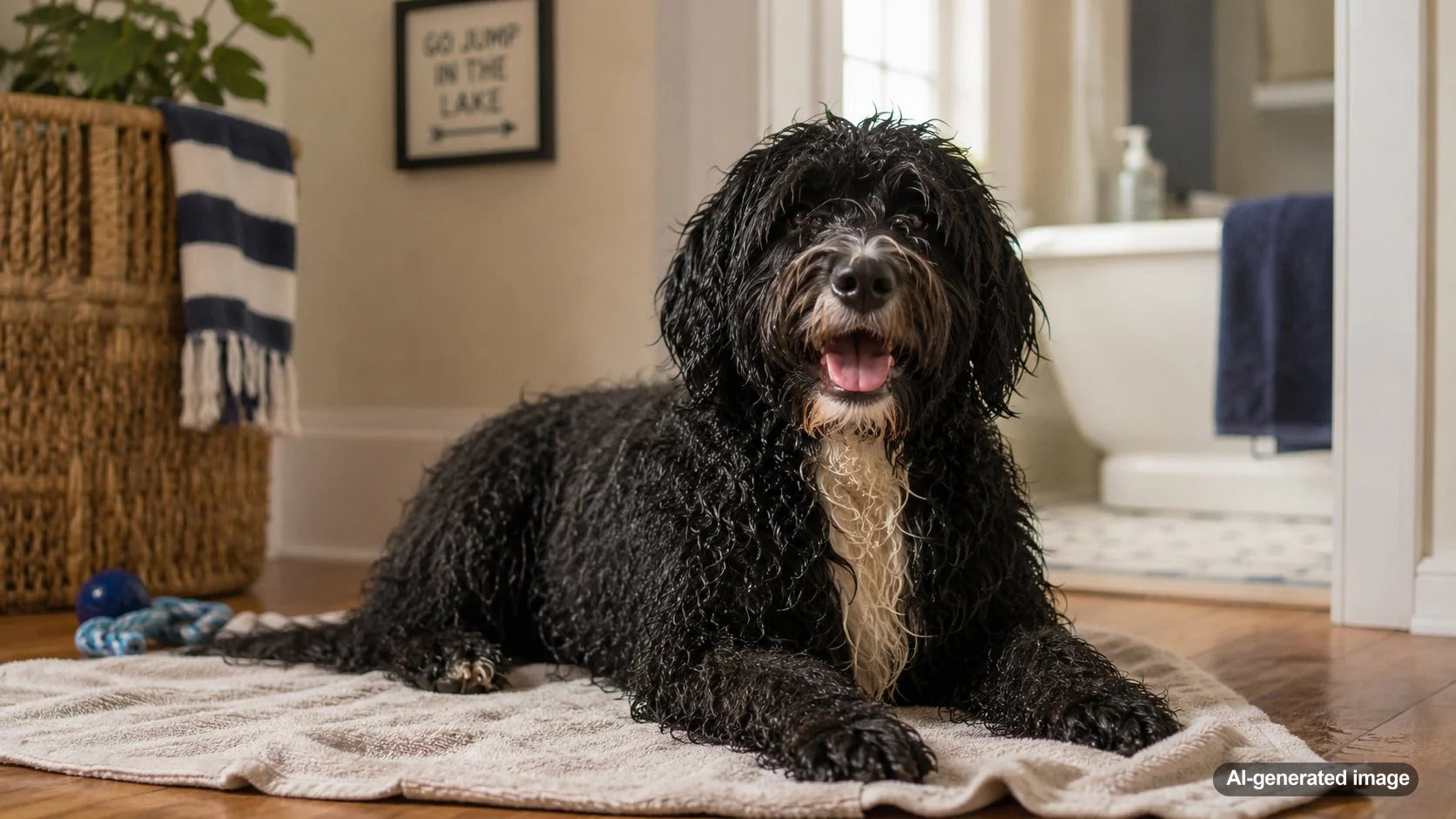
Some dogs will launch themselves into a lake, charge through ocean waves, or treat every backyard sprinkler like a personal amusement park. Mention bath time, however, and that same dog may flatten against the floor or disappear behind the couch. Several breeds are naturally drawn to swimming and water play, but enjoying open water does not automatically mean enjoying shampoo, slippery tubs, running faucets, or being physically handled.
The difference makes more sense when you look at the experience from your dog's perspective. Swimming offers movement, choice, play, interesting scents, and often a favorite person nearby. A bath can involve confinement, unfamiliar sounds, an unstable surface, water near the face, and no obvious way to leave. Even a water-loving dog may decide those are two completely different activities.
Quick answer: Labrador Retrievers, Portuguese Water Dogs, Newfoundlands, Chesapeake Bay Retrievers, Irish Water Spaniels, Boykin Spaniels, Poodles, and several other retrieving or water-working breeds often enjoy swimming. Individual personality and past experience matter more than breed alone, so none of these dogs is guaranteed to love either swimming or bathing.
Why Can a Dog Love Swimming but Hate Baths?
Control is often the biggest difference. At a lake or pool, a dog may choose when to enter, how deep to go, and when to climb out. In a bathtub, the dog is placed in a small area while water, shampoo, hands, and towels move around them.
Footing matters too. A confident swimmer can become nervous the moment their paws slide on porcelain. Running water may sound unusually loud in an enclosed bathroom, while spray near the eyes, nose, and ears can feel startling. Some dogs also associate baths with nail trims, ear cleaning, or being restrained.
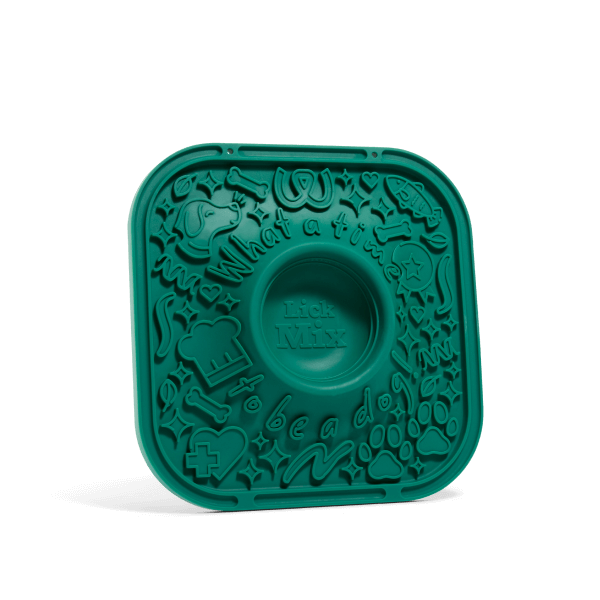
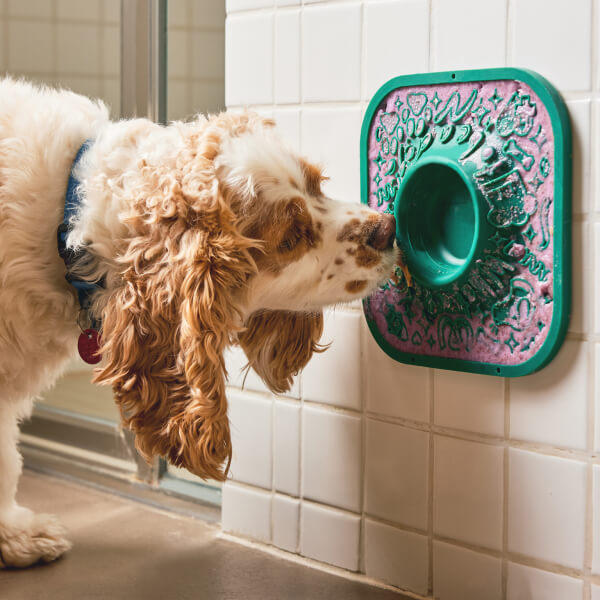
A suction-cup enrichment tool such as The LickMat can provide a steady licking activity during grooming. It should support gradual training rather than being used to force a frightened dog through a stressful bath.
Breeds Commonly Known for Enjoying Water
Labrador Retriever
Labs were developed as working retrievers and are often enthusiastic swimmers. Their strong build, webbed feet, and water-resistant double coat support movement through cool water. Many Labs will retrieve a toy repeatedly long after their owners are ready to stop.
Portuguese Water Dog
Portuguese Water Dogs historically worked alongside fishermen, helping retrieve equipment and carry messages through the water. They are athletic, intelligent, and frequently happiest when water play includes a job, such as fetching a floating toy.
Newfoundland
Newfoundlands have a long history of water work and rescue. Their large bodies, partially webbed feet, and water-resistant coats make them powerful swimmers. Their size also means owners should provide an easy exit from pools and avoid slippery ladders or narrow steps.
Chesapeake Bay Retriever
The Chesapeake Bay Retriever was developed to retrieve waterfowl in demanding conditions. These strong, determined dogs often tolerate cold water well, but their drive can encourage them to keep working after they need a rest.
Irish Water Spaniel
With a tightly curled, water-repellent coat and an energetic working style, the Irish Water Spaniel is well suited to aquatic activity. Their coat still requires careful maintenance because moisture trapped near the skin can contribute to tangles and irritation.
Boykin Spaniel
Boykin Spaniels are compact sporting dogs bred for hunting and retrieving in water. Their smaller size can make them convenient adventure companions, although they still need supervision, rest breaks, and safe entry points.
Standard Poodle
The Poodle's elegant appearance sometimes hides its history as a water retriever. Standard Poodles are athletic, intelligent swimmers, and their traditional coat clips originally had practical purposes connected to water work.
Nova Scotia Duck Tolling Retriever
Often called a Toller, this energetic retriever was developed to attract and retrieve waterfowl. Tollers commonly enjoy fast-paced games around water and may become highly focused on floating toys.
How to Make Bath Time Easier for a Water-Loving Dog
Start by removing the pressure to complete a full bath. Let your dog investigate the dry tub, step onto a nonslip mat, receive a reward, and leave. Repeat until entering the bathing area looks ordinary rather than alarming.
Next, introduce one element at a time. You might briefly turn on the faucet while your dog remains outside the tub, then reward calm behavior. On another day, wet one paw with comfortably warm water. Keep early sessions short enough that your dog stays relaxed.
Helpful routine: Prepare shampoo, towels, treats, a nonslip mat, and a rinse cup before bringing in your dog. Use low water pressure, protect the face from direct spray, and reward calm pauses throughout the process.
A portable option such as the FlipMat Mini may help create a familiar licking routine during travel, grooming, or other unusual situations. Always supervise licking activities and choose foods that are appropriate for your dog.
Water Safety Still Matters for Strong Swimmers
Breed history does not make a dog water-proof or accident-proof. Use a properly fitted canine life jacket around boats, moving water, steep shorelines, or deep pools. Show your dog exactly where the pool steps or ramp are, and never assume they can locate the exit while tired or frightened.
Take frequent breaks from retrieving. Dogs that repeatedly bite at splashes or carry their heads low may swallow significant amounts of water. Stop the activity if your dog becomes uncoordinated, unusually tired, nauseated, bloated, restless, or mentally dull, and contact a veterinarian promptly.
After swimming: Rinse away salt, chlorine, mud, or algae with fresh water. Dry the ears and dense coat carefully, but do not insert swabs into the ear canal. Ask your veterinarian about redness, persistent scratching, odor, pain, vomiting, weakness, or other concerning changes.
Remember That Breed Is Only a Starting Point
A Labrador can dislike swimming, while a mixed-breed dog with no obvious water-working ancestry may adore it. Puppies may need slow introductions, seniors may tire quickly, and dogs with short legs, heavy chests, flat faces, mobility limitations, or certain medical conditions can struggle to stay afloat.
Let your dog's behavior guide the activity. Relaxed muscles, voluntary re-entry, playful movement, and easy recovery suggest enjoyment. A tucked tail, frantic paddling, repeated attempts to escape, freezing, or refusing to approach the water means it is time to stop and create more distance.
Dog Parent FAQs
Do all Labrador Retrievers naturally know how to swim?
No. Many Labs are capable swimmers, but every dog needs a gradual introduction, close supervision, and a safe way to exit the water.
Why does my dog jump into lakes but refuse the bathtub?
Lakes offer space, movement, and choice. Bathtubs can feel slippery, noisy, restrictive, and unpredictable, especially when water is sprayed near the face.
Should I force my dog into the bath?
No. Forcing a frightened dog can increase fear and create a risk of injury. Use gradual training, secure footing, and rewards, or ask a qualified trainer or groomer for help.
Does swimming replace bathing?
No. Swimming can leave salt, chlorine, microorganisms, dirt, and moisture on the coat. Your dog may still need rinsing, drying, brushing, and occasional bathing with a dog-safe shampoo.
The Bottom Line
Water-loving breeds often have the physical traits and working history that make swimming especially rewarding, but bath time presents a different sensory and emotional challenge. Give your dog secure footing, more choice, gentle introductions, and a predictable routine. With patience, even a committed lake jumper who distrusts the tub may learn that getting clean is manageable.