






































































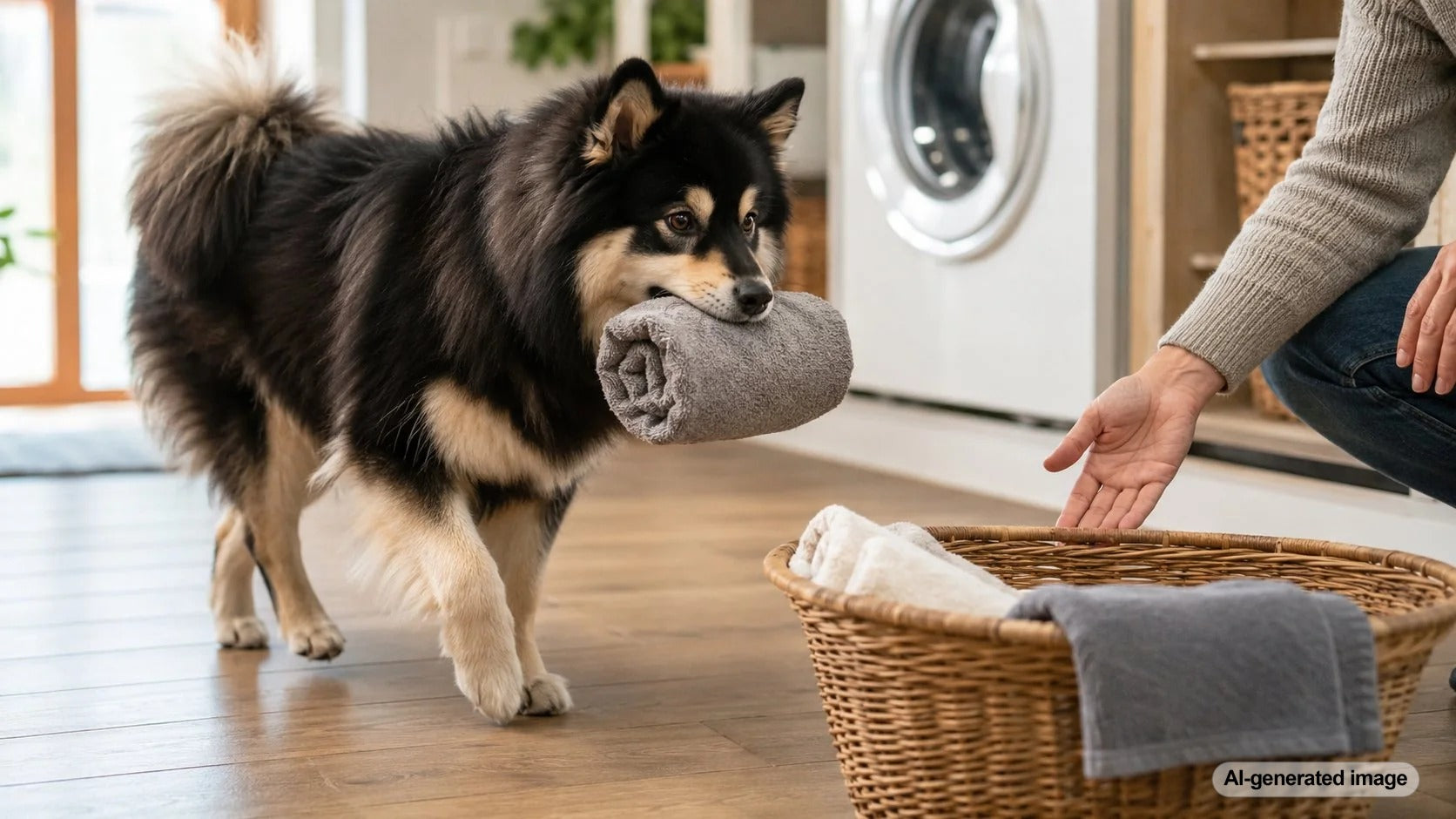
Some dogs light up when they realize they have a job. Carrying a soft item to another room, dropping toys into a basket, or waiting beside the pantry during meal preparation can turn an ordinary moment into meaningful enrichment. Breeds developed to retrieve, herd, or work closely with people may be especially enthusiastic helpers, but personality and training history matter more than a breed label alone.
The goal is not to make your dog perform real chores. It is to offer safe, playful tasks that provide mental exercise, strengthen communication, and give energetic dogs an appropriate outlet for their natural interests.
Retrievers May Love Carrying and Delivering
Labrador Retrievers and Golden Retrievers were developed to locate, carry, and return objects while working with people. That history can make games involving a gentle hold, retrieve, and release especially satisfying.
A retriever might enjoy carrying a lightweight mail pouch from one family member to another, bringing a soft cleaning cloth to the laundry area, or placing toys in a basket. Begin with a familiar toy before introducing household objects. Teach a reliable "take it" and "drop it," and reward calm delivery rather than excited grabbing.
Only use clean, dog-safe objects that are too large to swallow. Never ask a dog to carry medication, glass, batteries, cleaning supplies, sharp utensils, hot items, or grocery bags containing food they could access.
Border Collies and Other Herding Breeds Often Enjoy Sequences
Border Collies, Australian Shepherds, Shetland Sheepdogs, Australian Cattle Dogs, and Pembroke Welsh Corgis are frequently quick to notice patterns. A routine with several predictable steps can be more engaging for these dogs than repeating one trick many times.
Try teaching a sequence such as picking up one toy, carrying it to a basket, dropping it inside, and returning to you. You can also ask the dog to touch a cabinet with their nose before mealtime or go to a designated mat while you sort laundry.
Herding instincts can sometimes appear as circling, staring, barking, or nipping at moving feet. Do not encourage a dog to herd children or other pets as a household job. Redirect that energy toward target training, scent games, or organized toy cleanup.
Poodles and Spaniels Can Be Creative Helpers
Standard, Miniature, and Toy Poodles are bright, people-oriented dogs that often enjoy learning precise behaviors. English Springer Spaniels and other sporting spaniels may also appreciate search-and-retrieve activities.
These dogs might enjoy finding a named toy, touching the correct storage bin, or locating a washcloth placed in an easy hiding spot. Size the task appropriately. A Toy Poodle can carry a small plush toy, while a larger dog may comfortably move a rolled towel. The object should never force the dog to strain, drag weight, or climb while carrying something.
German Shepherd Dogs and Working Breeds May Thrive With Purpose
German Shepherd Dogs, Doberman Pinschers, Rottweilers, and similar working breeds often benefit from structured interaction. Their household routine might be as simple as going to a station while groceries are unpacked, carrying their own empty leash to the door, or performing a short sequence before a walk.
Calm stationing is an underrated job. Teaching a dog to settle on a mat while you cook, answer the door, or fold laundry gives the dog a clear role without creating unnecessary excitement. It can be especially useful for large dogs whose eager assistance might otherwise put them underfoot.
Small Dogs and Mixed Breeds Can Join In Too
A helpful dog does not need a working pedigree or a large body. Papillons, Miniature Schnauzers, terrier mixes, and many other small dogs can be curious, food-motivated learners. Mixed-breed dogs may display retrieving, scenting, herding, or problem-solving tendencies that become apparent once you try different games.
For a small dog, useful routines could include ringing a dog-safe bell before going outside, finding a favorite toy, closing a lightweight drawer with a nose target, or stepping onto a mat while their walking gear is prepared. Senior dogs can participate with shorter sessions, nonslip footing, and tasks that do not require repeated bending or stairs.
How to Teach a Household Job Without Frustration
- Choose one safe behavior. Start with touching an object, picking up a toy, or going to a mat.
- Break the job into tiny steps. Reward looking at the basket before expecting a dog to drop a toy into it.
- Keep sessions brief. Two or three focused minutes can be enough, especially for puppies and beginners.
- Use clear cues. Give different names to "take it," "bring," and "drop" so the sequence stays understandable.
- Finish while the dog is successful. Stop before enthusiasm turns into grabbing, barking, or wandering away.
Small, easy-to-deliver rewards such as Love Nuggets can help reinforce each step without interrupting the lesson. If your dog needs a quiet activity after training, The Pupsicle can provide a separate licking and enrichment session while you finish the actual chore.
Common Mistakes That Make Helping Less Fun
A frequent mistake is combining too many skills before the dog understands each one. If your dog happily retrieves a sock but drops it halfway to the basket, practice carrying for one extra step rather than repeating the full cleanup cue.
Avoid chasing a dog who steals an object. Chasing can turn theft into a rewarding game. Instead, manage access to unsafe items and practice trades with approved toys. Do not force participation, scold mistakes, or use household tasks as a substitute for walks, social time, rest, and species-appropriate play.
Dog Parent FAQs
Can any dog learn a simple household routine?
Many dogs can learn at least one household routine, regardless of breed. Adjust the task to the dog's size, mobility, confidence, and preferred rewards.
Are household jobs enough exercise for a working breed?
No. These games provide useful mental enrichment, but most working and herding dogs still need suitable physical exercise, rest, social interaction, and opportunities to express natural behaviors.
What household job should I teach first?
Toy cleanup is a practical starting point. First teach your dog to pick up and release one toy, then practice dropping it over a wide, stable basket.
When should I stop a training session?
Pause if your dog avoids the task, becomes frantic, repeatedly grabs the wrong objects, or shows signs of discomfort. Sudden reluctance, limping, pain, or a major behavior change warrants a conversation with your veterinarian or a qualified professional.
A Little Purpose Can Enrich an Ordinary Day
Simple household routines work best as shared games, not obligations. Match the activity to the dog in front of you, reward progress generously, and keep every object and movement safe. Whether your helper is a driven Border Collie, a proud retriever, a tiny Papillon, or a one-of-a-kind mixed breed, a well-chosen job can make everyday life more interesting for both of you.


