






































































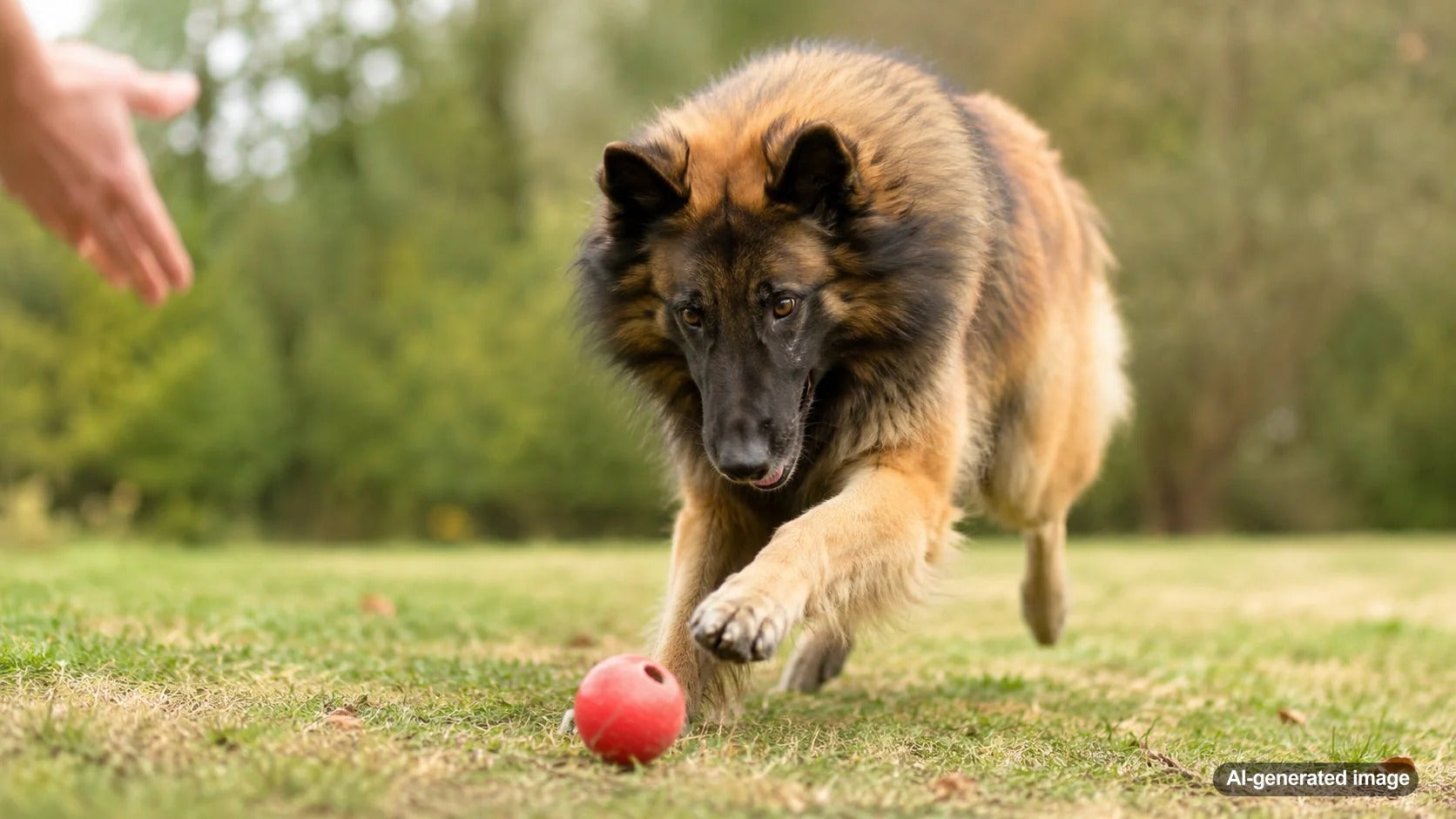
Some dogs can turn a basic toy into a five-minute project, solve it, and then look at you as though they are waiting for the advanced assignment. Breeds developed to herd, retrieve, guard, hunt, or work closely with people often bring impressive focus and problem-solving ability into the home. For these quick thinkers, the right enrichment is not simply about adding more toys. It is about creating variety, appropriate challenge, and satisfying ways to use their natural skills.
A dog who loses interest in simple toys is not necessarily stubborn or spoiled. The activity may be too predictable, the reward may be too easy to reach, or the toy may not match the way that particular dog prefers to work.
What Does It Mean for a Dog to Be Too Clever for a Basic Toy?
A toy is too basic when a dog can predict exactly what it does and obtain the payoff without sustained thought or effort. You might see your dog empty a simple treat ball immediately, flip a puzzle over instead of working through it, or abandon a toy after checking the usual hiding spots.
Canine intelligence also takes different forms. One dog may learn cues after only a few repetitions. Another may independently figure out how to open doors, move barriers, or reach food. A scent-driven dog may ignore a visual puzzle but stay absorbed in a hidden-treat search. The goal is not to prove that one breed is smarter than another. It is to identify the kind of challenge that keeps your dog interested.
Breeds That Often Need More Complex Enrichment
Border Collies
Border Collies are famous for rapid learning, intense observation, and a strong desire to work. A repetitive toy may hold their attention briefly, while an activity involving several steps, changing rules, or interaction with their person can be far more satisfying. Try combining toy play with cues such as wait, find it, bring, left, and right.
Poodles
Standard, Miniature, and Toy Poodles are often quick learners with excellent problem-solving skills. Many enjoy activities that blend movement, scent, and human interaction. Instead of handing over the same filled toy each day, vary the filling, hiding place, difficulty, or cue required before the game begins.
German Shepherd Dogs and Belgian Shepherds
These attentive working dogs often thrive when play feels purposeful. Search games, obedience exercises, object identification, and food puzzles that require controlled manipulation may hold their attention better than passive toys. Their size and jaw strength also make careful toy selection and supervision important.
Australian Shepherds and Australian Cattle Dogs
Herding breeds tend to notice movement, patterns, and changes in their environment. Australian Shepherds and Australian Cattle Dogs may quickly memorize a predictable puzzle. Rotating between rolling feeders, scent searches, short training sessions, and outdoor tasks can provide more variety.
Shetland Sheepdogs and Papillons
A small body does not mean a small need for mental exercise. Shetland Sheepdogs are responsive herders, while Papillons are lively companion dogs known for succeeding in training and dog sports. Choose toys that are physically manageable without making the challenge overly easy.
Retrievers and Other Task-Oriented Dogs
Golden Retrievers, Labrador Retrievers, and other sporting dogs may be especially motivated by carrying, locating, and delivering objects. A simple fetch toy becomes more interesting when the dog must distinguish between named objects, search different rooms, or return a specific item.
Signs Your Dog Is Ready for a Harder Challenge
- Your dog completes the activity almost immediately.
- Your dog uses brute force instead of the intended puzzle steps.
- Your dog checks the toy once and walks away.
- Your dog becomes destructive after exercise and ordinary play.
- Your dog creates independent entertainment by opening cabinets, stealing objects, or dismantling toys.
- Your dog stays more engaged with training and scent work than with passive toys.
These behaviors can suggest boredom, but sudden behavior changes may also be connected to stress, discomfort, or another concern. Contact your veterinarian or a qualified behavior professional if destructive behavior appears suddenly, becomes intense, or is accompanied by changes in appetite, sleep, movement, or social behavior.
How to Make Enrichment More Challenging Without Causing Frustration
Start with a task your dog can solve, then change one variable at a time. You might partially cover a treat compartment, hide the toy in an easy location, or ask for one familiar cue before releasing the dog to play. Increase the challenge only after your dog understands the basic game.
A useful challenge should create focused effort, not frantic behavior. If your dog barks at the toy, repeatedly paws at you, bites the puzzle aggressively, or walks away, make the next attempt easier. Smart dogs still need successful repetitions while learning new rules.
Build a Smarter Toy Rotation
Leaving every toy available all day can make even good enrichment feel ordinary. Keep a small selection out and rotate it every few days. Include different activity types rather than several toys that all work the same way.
A balanced rotation might include one durable chew, one interactive food toy, one movement-based toy, and one activity you do together. The Walkabout, for example, turns a portion of a meal into a rolling slow-feeder game with an adjustable opening. Changing the food size or dial setting can help prevent the experience from becoming identical every time.
For dogs who enjoy manipulating, tugging, and searching for food, Nomchucks can add another style of treat-stuffable puzzle play. Introduce any new toy under supervision and confirm that its size and durability suit your dog's body, chewing habits, and play style.
Enrichment Does Not Have to Come From a Toy
Clever dogs often benefit most from a varied routine. Scatter part of breakfast in the grass, hide treats around one room, practice naming toys, teach a new trick, or take a slow sniff-focused walk on a different route. Even asking a dog to locate one family member can turn an ordinary afternoon into a meaningful search game.
Physical exercise remains important, but simply adding more running may create a fitter dog who is still mentally restless. Combining movement with decisions, scent, self-control, and communication usually creates a more complete activity.
Dog Parent FAQs
Can any dog become bored with basic toys?
Yes. Breed tendencies can offer clues, but age, experience, motivation, and individual personality all affect how quickly a dog masters or loses interest in an activity.
Should I buy the hardest puzzle available?
No. Begin with an achievable challenge and increase difficulty gradually. A puzzle that is too hard may cause frustration instead of productive mental exercise.
How long should an enrichment session last?
Many dogs do well with several short sessions rather than one long session. Watch your dog's focus and stop before the activity becomes frustrating or repetitive.
Is destroying a puzzle proof that my dog is bored?
Not always. The toy may be too fragile, improperly sized, or frustrating. Supervise play, remove damaged toys, and contact a professional if destructive behavior is persistent or concerning.
The Bottom Line for Bright Dogs
A clever dog does not need constant entertainment, but they do need appropriate outlets for curiosity, instinct, and problem-solving. Pay attention to how your dog approaches each activity, rotate the type of challenge, and build difficulty in small steps. The best enrichment routine is not the one with the most complicated toy. It is the one that keeps your dog safely engaged, gives them a satisfying job, and remains practical enough for you to repeat.


